
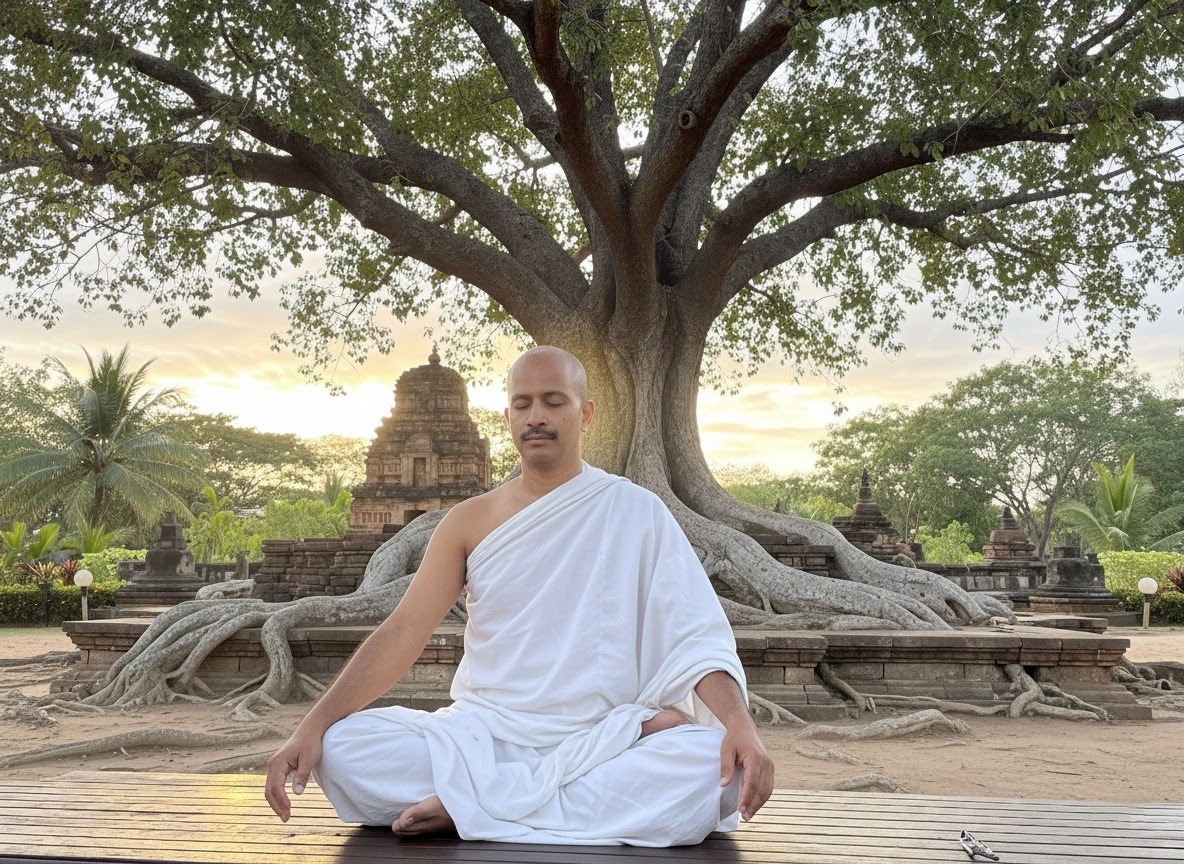
- My journey
- Where did I Start?
- Period: 2014-2019
- Period: 2020-To Date
I’ve been contemplating to pen down my journey into Buddha Dhamma and what sutta’s has helped to unravel the truth, reduce the impurities from the mind & its associated senses, and how & where to start in order to liberate from raga, dvesha and moha, which are the key aspects for bondage.
In the recent past, have been getting queries on topic of pain and also on different dhamma aspects to awaken oneself from deep slumber which is called as “ignorance“. Ignorance of not seeing pain and suffering while doing everything to enjoy and find pleasure in everything.
However, when working with dhamma one will start to see that there is cycle of “pain” (aka. dukkha) one has to take to know something or even when ignorant of that very thing. To get rid of pain as well, one has to take the pain.
Over many years of research into finding meaning in my life started to see repetition of process everyday where one keeps on searching for food, shelter, clothing and medicine. We can only strive hard to make it better and take pain to possess. In this search found Buddha Dhamma to be very ideal for me due to the reason that it starts with “dukkha” or “pain” and relief from pain and a straightforward application for my problem. However, came through obstacle of:
- Which type of Buddha Dhamma to start? – Hinayana, Mahayana or Vajrayana
- Which kind of tradition? – Theravada (Sri Lanka), Myanmar, Thailand or Tibetan (Vajrayana), Chinese, Cantonese, Vietnamese, Japanese (Zen) and Indian (NavaYana)
- Which kind of meditation techniques? – Vipassana (Burmese and S.N Goenka), Sri Lankan, Thai, Chinese etc.,
- Recitation? What should be recited and for how many times? Again here, tradition plays a vital role
- What scripture needs to be read? – Sutta, Commentary like Visuddhimagga or Vishuddhimarga of Buddhagosha, Vinaya and Abhidhamma
- Where to find the ideal teacher depending upon the tradition?
- Should one get ordained or be a lay follower forever?
- Whose teachings are most appropriate for online viewing as in YouTube?
- Is there a way to know one’s progress and who is going to validate?
- How could one find that he/she has got awakened?
I guess you would also be having these questions and being perplexed, searching all over the place on internet and YouTube to satisfy the thirst of dhamma to find relief from pain.
After running around many years, gave up my search of finding through videos and resources on internet to a maximum extent and instead started to go deep into sutta as that was the only way left out for me to unravel the truth.
In my initial period of search, found S.N Goenka and Burmese tradition of Vipassana to be the most useful as it provided certain foundation in terms of sitting and watching the breath for 10 days without doing anything else other than watching it. This would be a very intriguing aspect and helps to get rid of many tendencies that had got developed. However, the limitation of this is that you need to hit the “retreat” regularly to practice which then does not help much as the impediments do not go away as such.
The goal was to come out of “pain” and not to keep on adding pain of going around multiple “retreats” which in itself is samsara or going round. Thus, through observing the practice found that indeed it does not lead to unbinding or nibbana and instead it just “calms mind” at a sub-conscious level which is very good relief from worldly business indeed which is required by the masses.
After that, found that PureDhamma.net run by Lal Pinnaduwage the best, supporting most of the sutta in terms of deeper information which he got through Ven.Waharaka who is considered by many as Arahat. He could unravel many of hidden meanings in the sutta and provide clarity without the need of commentary like Visuddhimagga of Buddhaghosha. Eventhough Visuddhimagga is good in many aspects of dhamma, it deviates into many techniques that are not stated in the sutta.
Thus, Ven.Waharaka teachings became highly popular from 2013-14 onwards as it provided the key meanings which were earlier covered up in conventional usage of language. Even today, puredhamma.net provides good information on dhamma and a recommended source to know deep dhamma.
Due to interaction with many people through chat forum of puredhamma, it helped me to develop better dhamma and got clarity which I was seeking for long time.
During that time got in touch with Dharmayai Obai in Sri Lanka through chat forum of PureDhamma.net, I was instantly included in the Skype group managed by a moderator and we started discussing dhamma on Skype. During one of such discussion met a Sri Lankan kalyanamitta (dhamma friend) who helped me to visit Sri Lanka in order to meet Ven.Amadassana Thero near Colombo who used to give wonderful discourses in English every Sunday and now also he does and Dharmayai Obai have YouTube Channel.
In March 2018 along with this Dhamma friend, visited Sri Lanka where he made me very comfortable at his home in Anuradhapura. His family took great care of me during my week stay and always feel grateful to their love and affection shown by them.
We drove to meet Ven.Amadassana Thero near Colombo where the arame or Monastery was. Had good interaction with Ven.Thero and he could give us time out of his busy schedule. It was a good discussion of few hours where it spanned from jhanas to kamatthana to dhamma and how I came to be introduced to Ven.Waharaka teachings etc.,
The very next day being “Poya day” or Full moon day, got an opportunity to meet a Thero at Waharaka temple and discuss dhamma with him. It was a good experience since I was not formally introduced to deep dhamma. The discussion went in-depth into FIVE aggregates and was able to discuss at ease and they also felt very happy and in the end, said that I should be a “jati-sotapanna” (Sotapanna by birth) since I’m not coming from that background, nor have learned any dhamma formally. This boosted my confidence to deep dive into dhamma on my own using sutta and workout diligently.
After my return to India, this Sri Lankan friend introduced me to Ariya Nissaraneya Magga arame in Sri Lanka and we had good discussions. Later, they wanted me to spread dhamma by giving discourses in English. Initially reluctant, started delivering ‘desanas’ and that helped me not only to read and understand sutta’s, but also explain in simple words. Also, I came to know that I could easily understand around 70% of Sinhala and that helped me to understand various discourses or ‘desanas’ of many Theros especially Ven.Waharaka.
Ven.Sobitha Thero of Ariya Nissaraneya Magga during one of my desana delivery suggested me to go through Venerable Kaṭukurunde Ñāṇananda writing and videos. Once I started on that, dhamma started to develop very fast. His famous book “Nibbana – Mind Stilled“ helped me in clarifying many dhamma topics and was a real ‘eye-opener’. This was my best dhamma experience which made me reach higher than what it was while at Sri Lanka.
After multiple rounds of reading of 33 sermons which he had delivered in Sinhala and translated to English, got much clarity and also various insights.
There are videos available on YouTube where he has spoken in English and here is the link to his YouTube channel and they are quite good.
I’m very much grateful to Ven. Kaṭukurunde Ñāṇananda who helped me in understanding and develolp “proper” dhamma.
His another famous book is “Dependent Origination” is a definite recommend.
You can click here to download pdf file.
One of the dhamma friend who was also a coordinator in Skype forum requested me to join Discord forum to share and discuss dhamma. This too had good impact for me as it helped me to not only share what I know, but also learn from others who are practising as per Ven.Waharaka teachings. Met many dhamma friends there and the journey was good for quite a while, but then the dissatisfaction was still around since nibbanic bliss was missing.
However, my journey with Discord could not be sustained due to “narrow view” that only “Ven.Waharaka teachings is right” and everything else is wrong thus turning into sectarian view. The conventional English translations is misplaced and error prone at most places, but it does not mean that it cannot be referred at all.
The forum used to be constantly filled with debates, arguments and flaring of anger in subtle form and the moderator used to feel that his dhamma is ONLY correct and everyone else is wrong if they are not following Ven.Waharaka.
I found that it would not be appropriate as it would instil hatredness and irritation which can catch up quickly and is one of the key obstacle in the path. Considering that I left the forum without causing injury to myself or to others.
After that, one of the dhamma friend in Discord requested me to just have a look at Bhante Vimalaramsi’s 6R and it helped a lot to get into atleast ‘mundane nibbana’. However, the dissatisfaction of not able to get right dhamma still continued.
With dissatisfaction lurking around, there came a determination to find an end to this “searching and seeking” as this was taking my energies and not leading me anywhere. Whenever I thought that dhamma has been found through internet and videos, it ended with shortfall and dissatisfaction continued.
From 2020 onwards, insights started to come much more profound than the initial period. The sutta that helped me to get into groove was Pāsarāsisutta(MN26)
In this sutta, Buddha explains 7 things that needs to be experienced.
| nibbidāya | Experiencing foulness in body, breaking of every material object, losing the objects one desires and hence gets “dis-illusioned” of all conditioned things |
| virāgāya | Seeing that senses do not give any lasting pleasure as there is moment to moment arising and passing way which makes mind anxious to get it back, which never happens |
| nirodhāya | Seeing that anything that arises, passes away. Can be seen in breath, person, any objects or things |
| upasamāya | Getting a relief, peaceful, calm feeling due to the above practice |
| abhiññāya | Seeing for oneself what is the truth – Ex: Food is the source of everything – physical and mental instead of treating as a person, as a friend, as a wife, as a son etc., |
| sambodhāya | Penetrating and experiencing for oneself 4 NOBLE TRUTH |
| nibbānāya | Ending of craving, which then removes raga, dvesa and moha and attains nibbanā |
This is my yardstick of progress to see how far in Dhamma I’ve reached. Having understood and known correctly, able to practice dhamma for ending of pain.
Apart from the above, another important thing that needs to be comprehended and analysed all the time is a question from Buddha in Mahātaṇhāsaṅkhayasutta(MN38) where he asks the monks as follows:
Cattārome, bhikkhave, āhārā bhūtānaṁ vā sattānaṁ ṭhitiyā, sambhavesīnaṁ vā anuggahāya.
What four?Katame cattāro?Solid food, whether coarse or fine; contact is the second, mental intention the third, and consciousness the fourth.
Kabaḷīkāro āhāro oḷāriko vā sukhumo vā, phasso dutiyo, manosañcetanā tatiyā, viññāṇaṁ catutthaṁ.
What is the origin, dependently arising, birthplace, and influence of these four fuels?
Ime ca, bhikkhave, cattāro āhārā kiṁnidānā kiṁsamudayā kiṁjātikā kiṁpabhavā?Craving.
Ime cattāro āhārā taṇhānidānā taṇhāsamudayā taṇhājātikā taṇhāpabhavā.
And what is the origin, dependently arising, birthplace, and influence of craving?
Taṇhā cāyaṁ, bhikkhave, kiṁnidānā kiṁsamudayā kiṁjātikā kiṁpabhavā?
Feeling.
Taṇhā vedanānidānā vedanāsamudayā vedanājātikā vedanāpabhavā.
And what is the origin, dependently arising, birthplace, and influence of feeling?
Vedanā cāyaṁ, bhikkhave, kiṁnidānā kiṁsamudayā kiṁjātikā kiṁpabhavā?
Contact.
Vedanā phassanidānā phassasamudayā phassajātikā phassapabhavā.
And what is the origin, dependently arising, birthplace, and influence of contact?
Phasso cāyaṁ, bhikkhave, kiṁnidāno kiṁsamudayo kiṁjātiko kiṁpabhavo?
The six sense fields.
Phasso saḷāyatananidāno saḷāyatanasamudayo saḷāyatanajātiko saḷāyatanapabhavo.
And what is the origin, dependently arising, birthplace, and influence of six sense fields?
Saḷāyatanañcidaṁ, bhikkhave, kiṁnidānaṁ kiṁsamudayaṁ kiṁjātikaṁ kiṁpabhavaṁ?
Name and form.
Saḷāyatanaṁ nāmarūpanidānaṁ nāmarūpasamudayaṁ nāmarūpajātikaṁ nāmarūpapabhavaṁ.
And what is the origin, dependently arising, birthplace, and influence of name and form?
Nāmarūpañcidaṁ, bhikkhave, kiṁnidānaṁ kiṁsamudayaṁ kiṁjātikaṁ kiṁpabhavaṁ?Consciousness.
Nāmarūpaṁ viññāṇanidānaṁ viññāṇasamudayaṁ viññāṇajātikaṁ viññāṇapabhavaṁ.
And what is the origin, dependently arising, birthplace, and influence of consciousness?
Viññāṇañcidaṁ, bhikkhave, kiṁnidānaṁ kiṁsamudayaṁ kiṁjātikaṁ kiṁpabhavaṁ?volitional choices.
Viññāṇaṁ saṅkhāranidānaṁ saṅkhārasamudayaṁ saṅkhārajātikaṁ saṅkhārapabhavaṁ.
And what is the origin, dependently arising, birthplace, and influence of choices?
Saṅkhārā cime, bhikkhave, kiṁnidānā kiṁsamudayā kiṁjātikā kiṁpabhavā?
Ignorance.
Saṅkhārā avijjānidānā avijjāsamudayā avijjājātikā avijjāpabhavā.
Due to insight into above seven aspects indicated in Pāsarāsisutta(MN26) and Mahātaṇhāsaṅkhayasutta(MN38), mind became very clear and radiant to understand dhamma at a deeper level. This has become my yardstick to measure how far in Dhamma have I reached.
In conclusion, discovered that going through suttas diligently with full focus is the correct way to understand and experience dhamma and was able to organise the suttas in a particular order for FOUR fold practising, which occurred to me as an insight. As I diligently practice, so is the fruit. If there is sloppiness in practice, fruit of dhamma is not going to be.
No pain, no gain
Take sufficient pain in order to maintain a particular state.
Which means, in whatever we do, pain would be very much consistent.
In that case, what are we trying to accomplish?:
Every moment, we are taking pain to get rid of challenges, disputes, worries etc., and to get relief from pain. That relief from pain is called “pleasure” which is what we are trying to accomplish by taking pain of existence.
Let us see where we all have to take pain in order to get pleasure:
Dukkha we take to make things happen
- Maintaining and managing the body - Gym, jogging, walking, eating etc.,
- Developing and maintaining relationships - friends, spouse, neighbour etc.,
- Education which aids for growth, rewards and then earning of name and fame
- Career - Where it leads to more returns all the time
- How to be rich and famous in a shortest time?
- Taking care of investments and where next. to invest?
- Automating anything and everything to make oneself comfortable
- How to solve disputes as in land, investments, money etc.,?
- How does one manage "Will" where property is shared between siblings or he/she does not get anything?
- How one lead through pursuit of happiness?
- Leadership and motivational theories and concepts for achieving desired outcome
- Honing new skills to meet competition and to stand out of crowd
- Growing in the organisation at the earliest
- Collaboration with teams, family members, societies, welfare association etc.,
- Societal compulsions and expectations that needs to be met
- How to meet family, friends and relatives obligations and expectations
- Meeting society norms, traditions and conditions
- Being a citizen of a particular country and adhering to law of land
- Managing Healthcare and Insurance
- Making both ends meet everyday -Demand and Supply
- Longing for comfort in life and to pursue due to 'upgrade' to the very end
- Vacation in order to remove pains
- Relief from work and family stress
- Taking care of parents and in-laws
I guess the list would go on. No matter how much pain we take, they cannot be set right since they are based upon conditions. As long as conditions matches, there is pleasure of doing them, but when the conditions change, they turnout to be painful. Even otherwise, while the conditions are suitable, the pain exists as they need to be maintained, but due to ignorance, we don’t feel it.
One can see that to ‘maintain’ a particular state, effort and energy has to be put else, it becomes ‘otherwise’ Ex: If one does not eat, then he perishes ; if he overeats, then becomes fat and sick; if one does not get required qualifications, then he cannot get job etc., Thus, if you fail to do this, then that happens. To ensure that does not happen, keep on doing this throughout life, but cannot be sustained.
In Buddha’s words: The worldling goes between ‘itthabhāvaññathābhāva‘
ittha, ‘Itthatta’ – Thisness, in this way
bhāva – State of existence
aññathā – Otherwiseness
- Buddha’s journey
- Pali and English meaning
- Should you require Pali?
- What is Sutta?
- Video on Siutta
Below sutta’s are good starting point to read in order to understand Buddha’s journey.
1. Pāsarāsisutta(MN26)
2. Bodhirājakumārasuttaṁ(MN85)
3. Pubbesambodhasutta(SN14.31)– This sutta is very important to know what is pleasure(assādo), danger(ādīnavo) and escape(nissaraṇaṁ) from danger.
4. Assādasutta(SN22.26)– Another sutta connected with pleasure, danger and escape with five aggregates
Jāti maraṇa saṁsāraṁ
ye vajanti punappunaṁ
itthabhāvaññathābhāvaṁ
avijjāyeva sā gati
avijjā hayaṁ mahā moho
yenidaṁ saṁsitaṁ ciraṁ
vijjāgatā ca ye sattā
nāgacchanti punabbhavam
(Sutta reference: DvayatānupassanāSutta(SNP3.12)
Those who go on wandering again and again,
Alternating in saṁsāra between birth and death
Are involved in a change from thisness to otherwiseness
Which is merely a journey of ignorance
This ignorance is the vast delusion
Whereby for long this saṁsaric journey has gone on
But those that have come by knowledge
Come back never again to repeated birth
During these initial days found that I have good knowledge of Pāḷi and I thought that why I don’t do it myself without the need to go through so many videos, writings, books etc.,
Also, my schooling had been with Sanskrit as a subject and it helped me to a large extent to understand Pāḷi . However, when I looked at translating from Pāḷi to Sanskrit, found that it cannot be properly done and dropped the idea completely and treated Pali as distinct than Sanskrit.
Infact, Pali is a language of Ardh-Magadhi (half Magadhi or Magadh region of India) and refers to as vachana or saying of Buddha
One day, I re-looked at two passages where Buddha had informed, which I had gone through it earlier on, but never went deeper in knowing it for myself.
“Yo kho Vakkali dhammam passati so mam passati.
Yo mam passati so dhammam passati.”One who sees dhamma sees me Vakkali and one who sees me sees dhamma in that
Then, I started exploring the sutta myself and the Pāḷi language was no longer a barrier. Was able to understand the sutta deeper and started to get “wow” moments every now and then.
Eventually, it made me feel that Buddha is directly teaching me without any intermediary and that was the most happiest moment which has continued even today, and that proved the above statement which he had made to Vakkali, works.
What is Pāḷi as in Pāḷi Tipiṭaka?
Pakaṭṭhānaṃ vacanappabandhānaṃ āḷi Pāḷi”.
Pakaṭṭha means that which leads to noble or sacred;
vacana means sentences or words uttered.
Hence, Pakaṭṭha vacana means ‘sacred words or sentences of the Buddha that leads to noble path‘. The language used to convey the vacana or sacred words is Pāḷi
Should one know Pāḷi to decipher meaning of Buddha vacana?
Since each one of us are born in different traditions, religion and language, it would become challenging to learn Pāḷi language and unravel the sutta’s. However, if one were to start contemplating using English or in their mother tongue, with Pāḷi script then it starts to appear the knowledge or wisdom of what that sutta is talking about.
This is a laborious process, but yet worth it considering that we don’t have Buddha at the present time, There are many interpretations and commentaries which are indeed helpful and sometimes confusing due to generalisation. However, when we set an aim of liberation and dwell deeper, we can decipher the meaning of sutta on our own.
Let me also take this opportunity to indicate on what is “sutta”?
Sutta is made out of 2 parts – “su” and “atta” –
su = good
atta = person / personality
Thus, sutta means – That which makes a person good or noble. Thus Buddha Dhamma when practising sila, samādhi and Paññā via sutta makes one noble or ariya as it leads to ariyamagga or noble path.
Checkout the video below on what and how about Sutta
Thus,
When it happens as ‘thisness’ there is ‘pleasure’
Take pain in order to make “this” happen so that “otherwise” does not happen
Else, otherwiseness is going to be there and hence ‘pain’
I got lot of benefit from below sutta’s during my initial dhamma development on noble eight fold path. Have listed out the sutta for your reference
Proper Determination
Proper Determination – sammā saṅkappo – Vibhaṅgasutta(SN45.8), Cundasutta(AN10.176), Dvedhāvitakkasutta(MN19), Mahācattārīsakasutta(MN117), Ambalaṭṭhikarāhulovādasutta(MN61), Paṭhamamettāsutta(AN4.125) and Kodhanasutta(AN7.64)
Proper Speech
Proper Speech – sammā vācā – Vibhaṅgasutta(SN45.8), Vācāsutta(AN5.198), Musāvādasutta(Iti25), Cundasutta(AN10.176), Vaṅgīsattheragāthā(Thag21.1), Abhayarājakumārasutta(MN58), Subhāsitasutta(Snp3.3), Mahācattārīsakasutta(MN117), Ambalaṭṭhikarāhulovādasutta(MN61), Sāmaññaphalasutta(DN2), Viggāhikakathāsutta(SN56.9)
Proper Work or Action
Proper Action – sammā kammanto – Vibhaṅgasutta(SN45.8), Mahācattārīsakasutta(MN117), Upālisutta(AN10.99) and Cundasutta(AN10.176
Proper Livelihood
Proper livelihood – sammā ājīvo – Vibhaṅgasutta(SN45.8), Mahācattārīsakasutta(MN117), Sāmaññaphalasutta(DN2), Dīghajāṇusutta(AN8.54), Vaṇijjāsutta(AN5.177), Yodhājīvasutta(SN42.3) and Tālapuṭasutta(SN42.2)
Proper Effort
Proper Effort – sammā vāyāmo – Vibhaṅgasutta(SN45.8), Mahācattārīsakasutta(MN117) and Soṇasutta(AN6.55)
Proper Remembrance
Proper Remembrance / Mindfulness – sammā sati – Mahāsatipaṭṭhānasutta(DN22), Mahācattārīsakasutta(MN117), Janapadakalyāṇīsutta(SN47.20) [very important one], Ānāpānassatisutta(MN118) and Paṭhamamaraṇassatisutta(AN6.19)
Proper Balance / Samadhi
Proper balance / samadhi – sammā samādhi – Mahācattārīsakasutta(MN117), Janapadakalyāṇīsutta(SN47.20), Jhānasutta(AN9.36) [very important one], Samādhibhāvanāsutta(AN4.41), Uṭṭhānasutta(SnP2.10) and Kammanirodhasutta(SN35.145)
In summary, we need to:
1. Establish dhamma fully in the mind by knowing the 3 characteristics of existence
2. Able to find out and verify where I’ve reached as per sutta as verification
3. Able to experience FOUR NOBLE truth and see unbinding or nibbana.
4. Able to understand, comprehend and experience Dependent Origination in both ways. (anuloma and viloma) which helps in getting rid of all views relating to 5 aggregates
- How this is organized?
- Beginner
- Intermediate
- Advanced
- Summary
- Ariya Stages
The sections are organised as Beginner, Intermediate and Advanced. This is the way I started my journey into Dhamma and feel that it would help others too on the path.
Under each section, have listed out sutta reference so that you can see it for yourself and validate where you are reaching and what is your mental state and how it is transforming.
However, feel free to call, chat, write to me in case you have any queries relating to dhamma and would be more than happy to help on your path.
Beginner:
1. Understand what is Buddha, Dhamma and Sangha in a proper way
2. Establish 5 precepts properly to reduce 10 immoral deeds
3. Contemplate on the above for few weeks till it sinks in.
4. Understand that “dukkhā as a pain in everything” which is the starting point
5. Start to view that there is “no personality” (anattā) and/or liable to diminish (aniccā) by seeing this dukkhā which has to be taken.
6. Notice that everything arises and passes away. As long as conditions match, they seem to be there and hence pleasurable, else, pain is immediately felt.
- Establish “sila” of 5 precepts (NO – killing, stealing, sexual/sensual misconduct, intoxication of any kind, deliberate lying) during waking hours.
Workout using Cundasutta(AN10.176) for reducing and eliminating 10 immoral deeds - Duration: To begin with, remember this sutta for 2-4 weeks trying to establish during the whole day
Intermediate:
1. Work hard to reduce and remove 10 immoral deeds
2. Understand and comprehend Tilakkhana of aniccā, dukkhā, anattā
3. Understand what are FIVE aggregates of rūpa, vedanā, saññā, saṅkhārā, viññāṇa
4. Get understanding and investigating on Paṭiccasamuppāda and Conditionality.
5. Get foothold into FOUR Noble truth and analyse them
6. See 13 Lakkhana in all dhamma
7. Understand and get into Jhana and Gatha for removing defilements
8. Samatha or making senses tranquil through (karaniya mettasutta,
Etan Santan Etan Panitan, metta bhavana etc.)
9. Understanding on what are hindrances? know hindrances here
10. Validating being a Sotapanna
11. Verification on stage reached using 37 factors of awakening
Advanced:
1. Removing 10 immoral deeds and hindrances completely
2. Knowing Tilakkhana at a very deep level even while sleeping
3. Understand “dhatu“, “ayatana” and “mahabhuta” at a deeper level
4. Able to know what stage a person is in without a aid – Sotapanna, Sakadgami, Anagami or even Arahat
5. Deep dive into Paṭiccasamuppāda and knowing how each link operate and watch how conditionality creates mess of everything. When conditions are not there, nibbana is right there.
6 Deep understanding of viññāṇa or consciousness.
7. Establishing mind as in DN2 – Sāmaññaphalasutta (Fruits of ascetic life – here and now)
8 What are the different kinds of food we give and how one suffers with that?
9. Deeper understanding of 5 aggregates including their arising and passing away.
10. Establish jhana’s and Anapanasati
11. Verifying accomplishments through 37 factors of awakening.
12. Able to understand dhamma on your own through various suttas – without any requirement of guide or a person guiding it
This is how my journey started and hope that it will benefit you too on seeking correct dhamma. Shall be providing sutta links using SuttaCentral website with brief write up for every sutta. With SuttaCentral, you can find upto ~70% clarity on English translations. They have implemented “tooltip” which helps a lot to get English dictionary for Pāḷi words.
You could also get the Pāḷi script in your own language as they have that as well.
It would be good to reflect on Sīlavantasutta(SN22.122) which lays down what is required for: Sotapanna, Sakadagami and Anagami. The same steps lead to Arhat too. Understanding and reflecting on the FIVE grasping aggregates all the time would lead to complete liberation
Beginner series – What shall be achieved here?
- Get rid of immoral
- Understand Buddha, Dhamma & Sangha
- Understand Dukkha
- How to achieve Sotapatti magga?
Next understand on what is Buddha, Dhamma and Sangha. For that, one needs to understand on what is unsurpassable or the best.
Best sutta: Anuttariyasutta(AN6.30).
Why this sutta? Because it lays down what is to be done which then becomes foundation when we go for Advanced practice.
Below are the videos to meditate on Buddha, Dhamma and Sangha. Also includes writeup on Buddha, Dhamma and Sangha which will considerably help in removing skeptical doubts by providing you answers on why you are here.
| To know what is Buddha | Meditation on Buddha YouTube | Click here for explanation |
| To know what is Dhamma | Meditation on Dhamma YouTube | Click here for explanation |
| To know what is Sangha | Meditation on Sangha YouTube | Click here for explanation |
Next step is to understand “dukkha” in the context of Buddha Dhamma and not the conventional word “suffering”. Dukkha here refers to the “pain” and need to consider in everything [ no pain – no gain] and is endless until existence. Also, through moral foundations, we ensure that “bad consequences” do not happen in this life or in next lives.
The sutta for reference is Dukkhasutta(AN5.3)
What is the meaning and definition of Sotapanna?
There has been so much documentation, discussions, debate and arguments on what Sotapanna means – Sota = hearing ; apanna = arrived by. One who has come to Buddha dhamma through hearing the dhamma via discourse or through reading or through a teacher. Conventionally, it is referred in English as “stream-winner”
FOUR things are required to get to Sotapanna stage
1. Associating with true individuals (Sappurisasaṁsevo) – Associate with a person who is well versed in dhamma. Test – It should make you feel at ‘peace’ and lighter
2. Hearing the true teaching (saddhammassavanaṁ) – The teachings should be undiluted and undistorted. – Test – You will have ‘wow’ moments and feels lighter.
3. Wise attention (yonisomanasikāro) – Dhamma will help you for wise reflection and attention. If it is distorted or corrupted, ‘peace’ is not felt.
4. Practice of the Dhamma in accordance with the Dhamma (dhammānudhammappaṭipatti) – Reading the sutta’s and then it will “flash with insights” which makes dhamma strong in your mind which helps in removing immoral tendencies and hindrances.
Refer to: Sotāpattiphalasutta(SN55.55)
How would one know that he/she is a Sotapanna?
1. Wise faith in the Buddha (buddhe aveccappasādena)
2. Wise faith in the Dhamma (dhamme aveccappasādena)
3. Wise faith in the Sangha (saṅghe aveccappasādena)
4. Moral virtue of noble ones (ariyakanta sīla) which is removal of 10 immoral deeds
Sutta References:
1. Mahāmoggallānasutta(AN6.34)
2. Brahmacariyogadhasutta(SN55.2)
3. Mahāvacchasutta(MN73)
4. Aveccappasannasutta(AN10.64)
5. Paṭhamagiñjakāvasathasutta(SN55.8)
6. Nandiyasakkasutta(SN55.40)
7. Dutiyasāriputtasutta(SN55.5)
Why this stage is important?
This stage is very important for following reasons:
a. Vicikicchā – Skeptical Doubt – By this time doubt on who would be my teacher, what should be followed and what is the dhamma or teachings is completely eradicated. Which means, traditions (Sri Lankan, Indian, Tibetan, Thai etc., ) gets removed from the mind (better word – citta). In Pāḷi, skeptical doubt is called as “Vicikicchā“
b. sīlabbata-parāmāsa – One would not doing anything as a ritual as there is no need to follow due to “superstitions”, “norms and practice”, “traditional belief systems”. Instead one sees the cause and effect in everything due to understanding Buddha Dhamma. The Pāḷi term for ritual following is “sīlabbata-parāmāsa“. This literally means that by maintaining 5 precepts and taking vows, would lead to liberation, which is not the case.
c. Sakkaya-ditti – One penetrates into the 5 aggregates and hence removes the notion that:
a. I’m the body
b. I’m in the body
c. I’m apart from the body
d. This is my body
e. This body I’m possessing is there
All these THREE fetters would get completely eliminated when one comprehends and understands at a deeper level the meaning of Buddha, Dhamma and Sangha.
CONCLUSION ON SOTAPANNA
Is a person who has either FIVE or EIGHT sila (morality) all the time and who has complete faith (saddha) and dedication in Buddha, Dhamma and Sangha
Intermediate Series: What shall be achieved here?
- Introduction
- Deepen insight into 3 characteristics
- Video on Anicca, Dukkha, Anatta
- Understand 5 Aggregates
- Remove hindrances
- Way forward
- Understand the reality
- Establish jhānas
- Verification
After establishing the 10 moral deeds and knowing what is Buddha, Dhamma and Sangha and pain is there in everything, one needs to proceed to understand Tilakkhana for penetration into Buddha Dhamma indepth. This then then it takes you easily onto Arahat in various stages.
The challenge of interpretation of this Tilakkhana which consist of key words as in:
sabbe saṅkhārā aniccā
sabbe saṅkhārā dukkhā
sabbe dhammā anattā
The usual English translation of all the 3 is as under:
sabbe saṅkhārā aniccā — “all saṅkhāras (conditioned things) are impermanent”
sabbe saṅkhārā dukkhā — “all saṅkhāras are unsatisfactory”
sabbe dhammā anattā — “all dharmas (conditioned or unconditioned things) are not self”
The above is a wrong interpretation and we can test here through the forumla:
in English: What is impermanent leads to suffering and what is suffering is no-self
in Pali: yad aniccām tad dukkhām yad dukkhām tad anattā
Let’s take an example:
in English: If cancer is permanent, then it leads to happiness and what is happiness is self
in Pali: yad niccam, tad sukham, yad sukham, tad atta
Thus, one could see that “impermanence”, “suffering” and “not-self” do not exactly fit into this formula and hence has to be set aside. Instead, one need to consider, aniccā as:
1. Not sustainable
2. Always diminishing
3. Always arising and passing away
4. Not lasting even a moment
anattā as – “no personality or person”, but just a process as in:
1. Breathing
2. Digesting
3. Excreting
4. Circulation
Some illustrations from sutta to prove:
1. There are among humans no sensuous pleasures that are lasting.
☸ na santi kāmā manujesu niccā ( Nasantisutta(SN1.34)).
2. You should abandon fondness for what is un-lasting.
☸ Yaṃ kho bhikkhu aniccaṃ tatra te chando pahātabbo ti (SN22.66 Aniccasutta).
Here is a good sutta for Anicca – Aniccasutta.(SN22.45)
Next step is to understand 5 aggregates and the best sutta here is Pheṇapiṇḍūpamasutta(SN22.95). This sutta is excellent guide for practice. In this, 5 aggregates of Rupa (form), Vedana (feeling), Sanna (perception), Sankhara (volitional choices), Vinnana (consciousness) are compared to foam, rain drops, mirage, finding heart wood in plantain stem, and magician respectively.
If one could penetrate, will immediately experience “no pesonality” or “anatta” apart from truly knowing what is “anicca”
Removal of hindrances is a constant activity from the initial stage to sotapanna to sakadagami, to anagami and then reach Arahat.
We need to constantly checkup on the hindrances. They block the experiences of dhamma and also knowing aniccā, dukkha and anattā
Checkout on the hindrances by clicking here. We need to reduce them by analysis and penetration through Vipassana.
Once you are clear on this, next step is to understand Dependent Origination or Paticcasamuppada. This the most important aspect of Buddha teachings and getting into the understanding how things work.
Ariyasāvakasutta(SN12.49) gives the formula while Mahānidānasutta helps in understanding the links clearly and in a detailed explanation. To understand word meanings, Vibhanga is the good place and Paṭiccasamuppādavibhaṅga is a good source.
Sutta Reference:
Ariyasāvakasutta(SN12.49)
Mahānidānasutta(DN15)
Paṭiccasamuppādavibhaṅga
Upanisasutta(SN12.23)
About Upanisasutta
Upanisa means “sitting near”. In this case, sitting near a teacher (Buddha) and listening attentively to understand that the ending of defilements comes only when the truth is seen from very near. But seeing the truth comes about due to seeing near the condition required for that to happen. In this way, twelve factors leading to freedom (Vimuttī) are united with the twelve factors leading to pain when not seen keenly.
Typically it would take few months of continuous reflection and contemplation in order to comprehend and clearly see the links. When this is achieved, the next step is to understand 4 noble truth.
Here the best sutta would be Saccavibhaṅgasutta(mn141). Ven.Sariputta explains in detail about the 4 noble truth. It takes considerable amount of time to contemplate and drive deeper into it. But, once it is got, there is absolute “sukha” or happiness equivalent to 3rd Jhana or mental state of absorption.
Finally, you would also understand that everything that arises, would perish:
Everything is –
1. saṅkhatā (conditioned)
2. paticcasamutpanna (dependently originated)
3. nissattā (no being as a person in there)
4. nijjīvā (no life form can be found)
5. tucchā (insubstancial)
6.suññā (empty to core)
7. khaya dhammā (all dhamma’s keep on diminishing)
8. vaya dhammā (all dhamma’s dissapear)
9. virāga dhammā (all dhamma’s are not attached to anyone as in solidity, liquidity etc.,)
10. nirodha dhammā (all dhamma get extinguished)
11. Khayaṭṭhena aniccā (Since they diminish all the time, it is aniccā)
12. Bhayaṭṭhena dukkhā (As everything diminishes, so the fear is going to be there and is pain and suffering)
13. Asārakaṭṭhena anattā (it is essenceless to hold onto something as “me and mine”
Sutta relating to the 13 lakkhana?
Here is Ānandasutta(SN22.21) would be ideal as it lists from: aniccaṁ saṅkhataṁ paṭiccasamuppannaṁ khayadhammaṁ vayadhammaṁ
virāgadhammaṁ nirodhadhammaṁ, and does not provide word meanings.
However, above have provided each word meaning.
What are dhammā’s?
1. All dhatu’s or quality as in solid, liquid to everything around including 5 aggregates that can arise and disappear are dhammā
2. All those mentioned in this table below including 5 elements are dhammā
| Tattha cakku viññāṇa kāye | in the same way like the mental group of eye-consciousness, |
| sota viññāṇa kāye | of the mental group of ear-consciousness, |
| ghāna viññāṇa kāye | the mental group of nose-consciousness, |
| jīvhā viññāṇa kāye | the mental group of tongue-consciousness, |
| kāya viññāṇa kāye | the mental group of body-consciousness, and |
| mano viññāṇa kāye | the mental group of mind-consciousness, |
| cattāro khandhā | four aggregates, viz: |
| 1. Vedanā | feeling of object |
| vedanākkhandho | the aggregate of feeling : |
| 2. Saññā | notice of object (perception), |
| saññākkhando | the aggregate of perception, |
| 3. Cetanā | instigation of mind (volition), |
| saṅkhārakkhandho | the aggregate of mental concomitants, and |
| 4. Viññāṇaṃ | awareness of object (consciousness), |
| viññāṇakkhandho | the aggregate of consciousness |
| labbanti | are obtained. |
| Sabbe | all |
| ete dhammā | those four states of mental aggregates |
Now the question comes about Jhana’s. The best place to start jhana is on Etan Santan Etan Panitan and the sutta to be referred is: Jhānasutta(AN9.36)
With jhanas in place, you would be able to have mind in conducive state for samatha and vipassana which ideally removes defilements and makes one reach to each stage of Sotapanna, Sakadagami, Anagami and Arahat when one works out vigorously and consistently. Consistency is the key aspect here.
After establishing this much, certain Gatha’s (recitation) are required to develop jhana’s or meditative absorptions which will assist developing further and removal of immoral deeds.
1. Mettāsutta(KP9)– This would establish 4 Brahma Vihara which is foundation to get into higher realm during meditation practices and when mind is disturbed. Helps a lot to reduce restlessness and worry associated with any object and instead makes one to feel compassionate and joy for oneself and all beings at large.
There are 2 videos relating to this sutta which takes one from Sotapanna to Anagami if it were understood at a very deeper level.
a. Karaniyamettasutta Part 1
b. Karaniyamettasutta Part 2
2. Jinapajara – This is one of the best to make your mind feel that Buddha and others are protecting you in every given way and then making sure that fear, distractions etc., are removed from your mind.
3. Mettabhāvanā – This is a must sutta for creating loving and kindness for oneself and others. With the help of this one, we can achieve a good mental state free from enemity, agitation and irrational thinking that ruins our mind and exhausts the energy.
With all of these, one can verify the stages of Sotapanna to Anāgami stages easily. Follow this video to know more
Advanced Series: What shall be achieved here?
- Introduction
- Understand consciousness
We are coming into advanced section which helps those who know that they have reached Sotapanna or already at the state of Sakadagami and beyond. We would require relevant suttas to understand dhamma from all aspects.
The collection of the sutta here, are from my experience and may not be applicable for all . Readers are advised to note that there are many suttas Buddha has delivered catering to each kind of mentality and hence one can search or take what is appropriate for him/her and search many more suttas for their appetite on SuttaCentral.net
Before we proceed further, better would be to understand on what is viññāṇa. In English it called as consciousness and sometimes referred as “mind” as well.
If one could go through Paṭiccasamuppādavibhaṅga, can see that there are NINE stages under Paccayacatukkaṁ section.
If you look at the English translation, seems weird and taking this opportunity to provide clarity on these NINE stages.
Usual English translation is as follows:
Tattha katamaṁ ‘saṅkhārapaccayā viññāṇaṁ?’
Herein, what is ‘with a (volitional) process as condition: consciousness?’
Yaṁ cittaṁ mano mānasaṁ hadayaṁ,
That which is thought, mind, mentality, heart,
paṇḍaraṁ mano manāyatanaṁ manindriyaṁ,
consciousness, mind, the mind sense sphere, the mind faculty,
viññāṇaṁ viññāṇakkhandho tajjāmanoviññāṇadhātu:
consciousness, the consciousness constituent, the mind-consciousness element arising from that:
idaṁ vuccati ‘saṅkhārapaccayā viññāṇaṁ.’
this is said to be ‘with a (volitional) process as condition: consciousness.’
As you could see above, it gets complicated on the meaning through conventional English explanation.
Below is what viññāṇa is all about:
9 stages of citta to viññāṇakhanda
1. citta – pure light – just falls on all the objects
2. mano – objectification – bringing four mahabhuta and updayarupa together
3. manasan – identification of that object – animal, bird, insect human etc.,
4. hadayam – Keeping the object to the heart as in getting connected with that object
5. pandaram – Feeling intimately associated with that object which creates emotions.
6. mano manayatanam – object now has a home wherein, there is a connection.
7. manaindriyam – making sense of that object and ready for story making
8. viññāṇa – vi + ññāṇa = without any knowledge of reality. Which means, viññāṇa is defiled consciousness and keeps on identifying and naming this and that.
9. viññāṇakhanda – heaps of distorted or defiled consciousness which keeps on providing experience to ‘mano’ on what it knows.
Let us now journey to Advanced series. Here, we are taking sutta’s which will help us to move from Sotapanna to Sakadagami to Anagami and to Arahat depending upon development of five indriya and bala
Suttas to contemplate deeply are listed below in series of 10 each.
- 10
- 20
- 30
- 40
- 50
- 60
- 70
- 80
- 90
- 100
- 114
- More about Jhānas
1. Bahudhātukasutta(MN115) – This sutta provides important aspects of dhātu. In all the books and internet, it is termed as “elements”, but it is not elements as such. Should be considered as “quality”. As you see in the sutta, pleasure, pain etc., are translated as “elements” while they cannot be elements. There are only 5 elements and nothing more than that. This sutta helps in understanding all about loka which is covered in the last of this series .
However, other parts of translation is correct and one can try to investigate on this sutta. If he/she is finding it real difficult, then it shows that the Sotapanna /Sakadagami stage has not been passed.
2. Indriyabhāvanāsutta(MN152)– This sutta explains about how to stop senses from going around sense objects. In the sutta, one can see how a normal person who started with Buddha dhamma would do and how an astute would do. This is again an advanced sutta to deep dive and experience stopping of movement of consciousness in all 6 senses. To understand this sutta, the mind should be in good maturity. Then you need to practice as indicated in the video below.
3. Sāriputtasaddhivihārikasutta (SN35.120)- This sutta is also a good sutta to understand about Indriya’s and how one can stop the senses moving into sense objects and what should be done. This time, it is from Sariputta who explains to his students on how to do it. This is one of the most important aspect to be considered in order to reach higher than Sotapanna and reaching all the way upto Anagami stage.
4. Sāmaññaphalasutta(DN2) – If one were to penetrate very well into this sutta, you can see for yourself on how one reaches to Arahat and how verifying this achievement.
Generally 3 things have to be accomplished in order to reach Arahat as indicated in the sutta.
a. Completed moral values and it has become his second nature.
b. Samadhi involving:
i. Sense restraint
ii. Being aware of what is happening in senses and mind
iii. Contentment
iv. Removing 5 hindrances
v. Paṭhamajhāna – First mind-stilling or absorption
vi. Dutiyajhāna – Second mind-stilling or absorption
vii. Tatiyajhāna – Third mind-stilling or absorption
viii. Catutthajhāna – Fourth mind-stilling or absorption
c. Panna or Wisdom involving EIGHT knowledge
1. Vipassanāñāṇa – Insight into reality
2. Manomayiddhiñāṇa – Astral movement through mental sheath or body
3. Iddhividhañāṇa – Psychic Powers
4. Dibbasotañāṇa – Clairaudience
5. Cetopariyañāṇa – Comprehending the Minds of Others
6. Pubbenivāsānussatiñāṇa – Recollection of Past Lives
7. Dibbacakkhuñāṇa – Clairvoyance
8. Āsavakkhayañāṇa – Ending of Defilements
Through this sutta, one can understand about what is sila, samadhi and panna and what all should be achieved in order to say that “arahat-phala” has happened.
Practical application of Sāmaññaphalasutta is there in following videos:
1. Understanding and practice of Sāmaññaphalasutta Day 1
2. Understanding and practice of Sāmaññaphalasutta Day 2
5. Susimaparibbājakasutta (SN12.70) – In this sutta, one can note that there are many bhikkus become Arahat, but without any psychic powers, but through wisdom. Susima goes to Buddha in order to understand the teachings so that he and his disciples can get food, shelter, clothing and medicines which would have got stopped due to Buddha and disciples popularity. His disciples instigates him to understand the teachings and learn to recite so that their comfort is not lost.
After meeting Buddha, Susima then understands the teachings and confesses his wrong doings and works out sufficiently to reach Arahat. His earlier disciples also join the Sangha henceforth.
6. Chachakkasutta (MN148)– The Buddha analyses the six senses from six perspectives, and demonstrates that there is no essence and is empty to the core. This when contemplated correctly helps to reach 7th jhana and higher.
You could read about how the sense, sense objects and consciousness create a sense of “I” by clicking here
7. Anupadasutta(MN111) – This sutta explains Sariputta achievements step by step and how should one enter from 1st jhana to 9th jhana or absorption. This will only work past Sotapanna stage and becomes very well established towards Anagami stage where one can see that all EIGHT jhanas can be achieved. When moving from eighth to ninth and accomplishing it, the person becomes fully accomplished or Arahat.
8. Girimānandasutta(AN10.60) – This sutta helps from Intermediate stage (at Sotapanna and beyond) into Arahat as it covers 10 different kind of perception which should be practiced diligently in order to reach the highest or supreme even in the most sick state of body where the person is about to die. In this sutta, Ananda recites this sutta to Girimananda and he comes back to life fully cured eventhough he was sick and was on his death bed.
9. Mahātaṇhāsaṅkhayasutta (MN38)– This is a fantastic sutta which explains about what is consciousness and how it manifests through all 6 senses. Gives clarity on dependent origination and how should one correctly understand it. Also, there is fantastic clarity on how beings are born, how they develop and what should be considered and what should not be. This sutta also covers morality, samadhi and how the wisdom shines and what should one do to liberate himself from the samsara.
10. Dasuttara Sutta(DN34) – This is a best contribution of Ven.Sariputta whose wisdom and insight is unmatchable. He talks about 10 x 10 things (totalling to 100) which once done completely would reach to Arahat.
Read more detail of Dasuttara sutta here
11. Saṅgītisutta(DN33) – On a similar lines of Dasuttara Sutta, this sutta goes even more detailed and hence both can be verified in order to reach Arahat state. Infact, these are the only 2 sutta which are sufficient to end the journey of samsara.
12. Dhātuvibhaṅgasutta(MN140) – This sutta explains about what dhatu’s are and how one should see them inside the body and also outside. Also, on what should be developed and experienced. This helps in coming out of “i ness” and “mine-ness” and one from grasping and wanting to become something or not to become something, thus leading to highest clarity and purity of consciousness which then is liberation from all sufferings
13. Pāyāsisutta(DN23) – Another beautiful sutta to remove micca-ditti or wrong views one would hold. This is applicable even today and one can see how, Ven.Kassapa resolves the problem and explains on what should be understood relating to how beings move about in the samsara and why removal of wrong views is most important
14. Puttamaṁsasutta(SN12.63) – This is a nice sutta which explains on how one should treat body, feelings, perceptions, sankhara and consciousness which are 5 aggregates which has “food” and “fuel” as it source. And when one cuts these fuels, then nibbana is reached then and there.
15. Atthirāgasutta(SN12.64) – On the similar lines of Puttamaṁsasutta, this sutta explains on how the fuel happens which is due to “raga” or “passion” or “wanting” which then makes a being to do many actions that causes more pains in order to make it happen in this life or in live’s to come.
16. Madhupiṇḍikasutta(MN18) – This is one of the best sutta which explains on “papanca-sanna-sankha” which means that:
a. Papanca – Proliferation of how am I doing?
b. sanna – perception
c. sankha – Estimating and re-estimating
When through all 6 senses, the being will start to make stories out of everything and then perception happens to make it real and then estimation and re-estimation starts due to an effort to keep “how am I doing” all the time comfortable.
17. Nirāmisasutta(SN36.31) – All about what is best sukha which is undiluted and that is nirāmisa. This sutta explains on how to attain Nirāmisa which is far better than samisa which is adulterated.
18. Māgaṇḍiyasutta(MN75) – a nice sutta explaining about how 5 senses gets the consciousness into trouble and how the being with consciousness suffers due to these senses.
19. Cūḷavedallasutta(MN44) – Question and Answer session between Dhammadinna and Visaka. Visaka has been married with Dhammadinna. Visaka meets Buddha and gets wisdom to the level of Anagami and after coming back home, he keeps himself at a distance of Dhammadinna who finds it strange of her husband behaviour.
Next day, she asks him on the change of his state and Visaka informs that he has been with Buddha and has understood the truth which then confirms him to be an “anagami” and hence cannot be with “wife” from now on. Also, he says that she can take possession of home, wealth like Gold, Silver etc., and settle down with her parents or she can stay here at home and he can go out of home.
Looking at this change, she meets Buddha and within a very short time of 2 weeks, she reaches Arahat stage. Whereby, Visaka then meets Dhammadinna and asks her questions which she completely answers, In the end, he puts her a question which shows his lack of knowledge and she directs him to Buddha. Later, Buddha says that what Dhammadinna has said is correct and in line with Dhamma and asks Visaka to workout properly. After few days, he is able to reach Arahatphala samapatti.
This sutta is very good to reach Arahat stage.
Watch below videos which provides practical application of this sutta:
1. Practising Cūḷavedallasutta Day 1
2. Practising Cūḷavedallasutta Day 2
3. Practising Cūḷavedallasutta Day 3
4. Practising Cūḷavedallasutta Day 4
20. Mahāvedallasutta(MN43) – Longer question and answer session between Ven.Sariputta and Ven.Mahākoṭṭhita on every aspect of dhamma including how many different ways of getting “ceto-vimutti” or complete release. This is a very good sutta for practice and to reach Anagami and Arahat stages.
Watch below videos which provides practical application of this sutta:
1. Experiencing Mahavedallasutta day 1
2. Experiencing Mahavedallasutta day 2
3. Experiencing Mahavedallasutta day 3
4. Experiencing Mahavedallasutta day 4
5. Experiencing Mahavedallasutta day 5
6. Experiencing Mahavedallasutta day 6
7. Experiencing Mahavedallasutta day 7
21. Alagaddūpamasutta(MN22) – In this sutta, one of the bhikkhu gets a wrong view “As I understand the Buddha’s teachings, the acts that he says are obstructions are not really obstructions for the one who performs them”. Other bhikkhu’s who hear from him try to persuade him to drop the wrong view and say that “The Buddha says that sensual pleasures give little gratification and much suffering and distress, and they are all the more full of drawbacks.”. When Ariṭṭha, the bhikkhu would not let go of this wrong view, they take this matter to Buddha who then gives discourse wherein he compares a person who can just recite and not really know anything about Dhamma. This is a nice sutta to analyse within ourselves whether we know it only as theory or is there any thing called ‘practical’ experience through those sutta’s.
22. Abhiṇhapaccavekkhitabbaṭhānasutta(AN5.57) – This sutta details on how old age, diseases, death, sorrow, lamentation etc., which is there in all living beings and reflecting on this ensures that the latent tendencies to do immoral deeds gets reduced and they feel much relief from suffering and pain since one can see that all beings go through this cycle and none of them is exempted.
23. Lakkhaṇasutta(DN30) – This is a great sutta to compare our various body parts, 32 in number with that of Buddha with its characteristics. We can easily find out why we are like this and while those who become Buddha would be. When I watched my body with that of Buddha, felt really disgusted and ashamed of the mistakes and omissions I’ve done in my former lives including the current. This has considerably helped me to not do these mistakes again since the body which gets created has all of these as source.
24. Kandarakasutta(MN51) – This sutta details about 3 kind of mortification and how one should not mortify which leads to bad destination. Buddha explains here on how one should lead a pious life without any mortification which then leads to liberation and not about mortification.
25. Dvedhāvitakkasutta(MN19) – Two kind of thoughts. One taking to danger and another taking to liberation. How to make mind rid of danger so that one can easily reach the shore.
26. Mahādukkhakkhandhasutta(MN13) – A good sutta to find out what is pleasure, danger of pleasure and escape from pains caused due to following pleasure. This is the difference between Buddha teachings and other sectarian teachings. This sutta talks about what should be answered when asked by other sect relating to Buddha teachings and how to ask them questions which then makes them very uncomfortable.
27. Paṭhamabhavasutta(AN3.76)– A nice sutta which explains on what is kamma, what is consciousness and what is moisture which brings in the existence as we see a plant coming into existence. If we could apply in our life, we can get into Arahat stage pretty soon.
28. Daṭṭhabbasutta(SN36.5) – Another great sutta which covers aspects of how should one consider pleasure, how should one consider pain and neutral feeling. What are the steps that needs to be followed so that the mind does not lead itself into defiled way of existence.
29. Nibbānasukhasutta(AN9.34)– This sutta explains about how 5 senses and jhanas are different and provides nibbana when one gets rid of sensual pleasures)
30. Sakkapañhasutta(DN21) – In this sutta, Sakka or Indra asks Buddha on what is the reason humans, devas, asuras, gandarva’s (fairies) eventhough know that bad deeds take them to a bad destination, but still end up doing the same. Buddha then explains that this happens due to the fact that beings get either jealous of someone and become stingy on another side. This sutta gives a very great perspective of what should be done and what should not be done.
31.Kāyagatāsatisutta(MN119) – This is one of the best sutta for developing awareness of the body. Covers most of the aspect relating to Mahasatipatthana Sutta, and is a must for getting body in a way that is feasible for meditation practice.
Herein, it talks about asubha bhavana which needs to be practiced to get rid of kama or enjoying sensuality.
Which Object are suitable for who?
Swollen Corpse: Those who lust after beauty of form.
Discoloured Corpse: Those who lust after beauty of the skin and complexion.
Festering Corpse: Those who lust after a sweet-smelling body, using perfumes.
Fissured Corpse: Those who lust after the firmness and solidity of the body.
Mangled Corpse: Those who lust after fullness of the flesh, such as the breasts.
Dismembered Corpse: Those who lust after graceful movements of the body.
Cut & Dismembered Corpse: Those who lust after perfection of the joints of the body.
Blood-stained Corpse: Those who lust after beauty produced by adornments.
Worm-infested Corpse: Those who are attached to the idea that the body is “me” or “mine.”
Skeleton: Those who lust after perfection of the teeth and nails.
One may refer to this document for practice.
32. Pañcakaṅgasutta(SN36.19)– A very good sutta which explains different kind of pleasures and why one should not get caught up in those pleasures. Infact, sensual has the least amount of pleasure and more amount of pain while jhanas have more pleasure than pain. However, getting into this requires pain to be taken and hence Buddha shows on what should be seen in pleasures.
33. Nīvaraṇavagga – Nīvaraṇa means “curtains” and vagga means section. This section talks about curtains that cover the citta and hence everything is looked in a distorted way. This is also called in English as “hindrances”. It is advisable to go through the entire section and not just the sutta, but the most fascinating sutta of all in this section is Rukkhasutta(SN46.39)
You could also read this article on Nīvaraṇa here
Other sutta that can help you to understand and remove “hindrances” are:
a. Pariyāyasutta(SN46.52): During one of the discourse, some ascetic of other sect informs certain bhikkhus that their teacher also teach them five hindrances and the seven awakening factors and they are trained to teach the same. If all are teaching the same thing, then what is the difference between us and Gotama Buddha? After meal is over, these bhikkhus come over to the Buddha and explains him what happened. After that, Buddha gives a detailed analytical exposition which is beyond the scope of other sects and informs them to reply back by knowing it.
b. Avijjāsutta(AN10.61): This is a nice sutta which explains that even for “ignorance” there should be a cause. And what is that cause? Hindrances are the cause of it.
c. Vammikasutta(MN23): A very apt sutta where in a deva comes with a riddle to Prince Kassapa and asks him to visit Buddha and then ask these questions. Then, follow what Buddha says. As directed, Prince Kassapa visits the Buddha and narrates the whole story. Buddha then solves the riddle which will make Prince Kassapa very glad fully motivated to do whatever is to be done.
d. Soṇasutta(AN.6.55): This sutta explains about putting more effort on one side and not putting any effort at all. Both are hindrances and do not allow a person to move forward. Thus, one needs to maintain balance in whatever he/she is doing in dhamma ensuring that they don’t fall into one side, but maintain the “middle”. A very nice sutta to remove hindrances.
There are 2 videos that will help you to understand about “hindrances” and how to remove them:
1. Hindrances in establishing samādhi – How to deal with it?
2. Removing hindrances to reach Anagami stage
34. Relating to 37 factors of Awakening
This is called as Bodhipakkiya Dhamma and the meaning of it is explained as below:
a. The four noble truth is called as Bodhi as it leads to panna and what needs to
be fully known – omniscience
b. It is called as bujjhati’ti Bodhi – That which knows the four truth’s and what
needs to be known is Bodhi
c. The tree under which Bodhisatta would know what needs to be known and
discovers the Four Noble truth is Bodhi
d. The definition is bujjhati ettha’ti bodhi
Katame ca te bhikkhave, dhammā mayā abhiññā desitā ye vo sādhukaṃ uggahetvā āsevitabbā bhāvetabbā bahulīkātabbā, yathayidaṃ brahmacariyaṃ addhaniyaṃ assa ciraṭṭhitikaṃ, tadassa bahujanahitāyabahujanasukhāya lokānukampāya atthāya hitāya sukhāyadevamanussānaṃ? Seyyathidaṃ cattāro satipaṭṭhāna cattāro sammappadhānā cattāroiddhipādā pañcindriyāni pañca balāni satta bojjhaṇgā ariyo aṭṭhagikomaggo.
The bodhipakkhiya-dhamma are so called because they form activities (pakkhiya) of Awakening (bodhi) which here refers to the Knowledge of the 4 noble truths
(magga-nàna). They are dhammas (mental phenomena) with the function of being proximate causes(padatthàna), requisite ingredients (sambhàra) and bases, or sufficient conditions (upanissaya) of Path Knowledge (magga-nàna).
1. Mahāsatipaṭṭhānasutta(MN10)– The Four Ways of Attending to Remembrance.
This is the most important sutta and skipping this would mean that first factor of
awakening itself is missed out, As one gets into advanced level, this sutta helps in
maintaining awareness and remembrance on what each dhamma is all about and
come out of compulsions he/she has created including tendencies, thus
achieving Anagami or Arahat as the case maybe.
Going through Satipaṭṭhānavibhaṅgo would be an excellent aid as it
covers many aspects of dependent origination.
2. Sammappadhānāni The Four Right Strivings: Refer to Padhānasutta – This short
and simple sutta explains about how and where to put effort which then leads to
factors of awakening.
3. cattāro iddhipādā – The four path to (iiddhipāda) power
Refer to Uṇṇābhabrāhmaṇasutta. This stutta explains to the Brahmin that how to
develop iddhipāda in order to accomplish the factors for awakening.
4. pañcindriyāni- The Five Faculties – Development of 5 indriyā’s and bala are
indicated in Asubhasutta
5. pañca balāni – Five strength – In Anguttara Nikaya, there is section on Bala and
in that this sutta Vitthatasutta would be the best recommended in understanding
and development strength which happens due to development of 5 indriyā’s.
6. satta bojjhaṅgā – Catusaccadhamme sutthu bujjhatì’ti sambodhi; sambodhiyà ango sambojjhango..
The word-explanation as above, means: because sambodhi fully awakens to the Four Truths, therefore, it is called “Awakenment”.
Sambodhi signifies here the Knowledge of the Supramundane Path (lokuttara-magga-nàna). A constituent of such Path Knowledge is called a Factor of Awakening.
There are 7 factors which are listed below:
1. Rememberance (sati-sambojjhanga),
2. Investigation of Dhamma (dhammavicaya-sambojjhanga),
3. Energy (viriya-sambojjhanga),
4. Joy (pìti-sambojjhanga)
5. Tranquillity (passaddhi-sambojjhanga),
6. Elevated state of mind (samàdhi-sambojjhanga),
7. Equanimity (upekkhà-sambojjhanga).
Sutta relevant to such an awakening is: Bhikkhusutta
Also if one can understand and comprehend Pāḷi can then go to Vibhanga and refer to this fantastic explanation in Bojjhaṅgavibhaṅga
7. ariyo aṭṭhaṅgiko maggo – Noble Eightfold path. The best sutta that can be
experienced would be Saccavibhaṅgasutta(MN141). A superb rendering by Ven.Sariputta
which puts one’s mind to rest and removes craving if properly practiced.
Here are the video’s relating to Bodhipakkiya dhamma
Knowing Bodhipakkiya Dhamma Day 1
Knowing Bodhipakkiya Dhamma Day 2
Knowing Bodhipakkiya Dhamma Day 3
Knowing Bodhipakkiya Dhamma Day 4
Knowing Bodhipakkiya Dhamma Day 5
In the next section, we are going to take those sutta which are important and by now we have established to the state of Sakadagami and Anagami due to which penetrating into these sutta becomes easy. Else, one will get lost in understanding these deep dhamma aspects. One need to tread carefully to see that they don’t get worked up and confused.
35. Mettāsahagatasutta(SN46.54) Some wanderers tell some Buddhist mendicants that they, too, teach the five hindrances and the four Brahmā meditations, so what is the difference? The Buddha explains the detailed connection between the Brahmā meditations and the awakening factors, which taken together lead to liberation.
36. Aggaññasutta(DN27) – This sutta explains about cosmology and different realm of existence based upon the mental state of beings and how the beings start to arrive from the top layer to bottom layer and get stuck in that layer or realm and not able to realise on how it arose there. In many books, it is considered as myth and is a way to refute the Brahminical accord of world or loka from Brahma to below worlds as indicated in the Upanishads and various Puranas indicate them including one in Gayatri Mantra. These fourteen realm are:
The 7 Vyahrtis (Heavens or Upperworlds):
1 Satya-Loka: Brahma’s Loka or Satya-Loka planetary system is not eternal. Abode of Truth or of Brahma, where atman are released from the necessity of rebirth.
2 Tapa-Loka: Abode of tapas or of other deities. Ayohnija Devadas live here.
3 Jana-Loka: Abode of the sons of God Brahma.
4 Mahar-Loka: The abode of great sages and enlightened beings like Markendeya and other rishis.
5 Svar-Loka: Region between the sun and polar star, the heaven of the god Indra. Indra, Devatas, Rishies, Gandharvas and Apsaras live here: a heavenly paradise of pleasure, where all the 330 million Gods (Deva) reside along with the king of gods, Indra.
6 Bhuvar-Loka (aka Pitri Loka): Sun, planets, stars. Space between earth and the sun, inhabited by semi-divine beings. It is a real region, the atmosphere, the life-force.
7 Bhur-Loka: The Vishnu Purana says that the earth is merely one of the thousands of billions of inhabited worlds like itself to be found in the universe.
The 7 Patalas (Underworlds Or Hell):
1 Atala-Loka: Atala is ruled by Bala – a son of Maya – who possesses mystical powers. By one yawn, Bala created three types of women – svairiṇīs , who like to marry men from their own group; kāmiṇīs, who marry men from any group, and the puḿścalīs.
2 Vitala-Loka: Vitala is ruled by the god Hara-Bhava – a form of Shiva, who dwells with attendant ganas including ghosts and goblins as the master of gold mines. The residents of this realm are adorned with gold from this region.
3 Sutala-Loka: Sutala is the kingdom of the pious demon king Bali.
4 Talatala-Loka: Talātala is the realm of the demon-architect Maya, who is well-versed in sorcery. Shiva, as Tripurantaka, destroyed the three cities of Maya but was later pleased with Maya and gave him this realm and promised to protect him.
5 Mahatala-Loka: Mahātala is the abode of many-hooded Nagas (serpents) – the sons of Kadru, headed by the Krodhavasha (Irascible) band of Kuhaka, Taksshaka, Kaliya and Sushena. They live here with their families in peace but always fear Garuda, the eagle-man.
6 Rasatala-Loka: Rasātala is the home of the demons – Danavas and Daityas, who are mighty but cruel. They are the eternal foes of Devas (the gods). They live in holes like serpents.
7 Patala-Loka: The lowest realm is called Patala or Nagaloka, the region of the Nagas, ruled by Vasuki. Here live several Nagas with many hoods. Each of their hood is decorated by a jewel, whose light illuminates this realm.
To this Buddha explains on the various lokas and they become 31 in number and is an interesting to find out how stories came to be in Upanishads & Puranas and how Buddha refutes that in this sutta.
37. Vekhanasasutta(MN80)– Question comes on what is the best colour and lustre and then Buddha explains each one of them. Also, he explains that one is not converted to his teaching just because of clever arguments, but because you see in yourself the results of the practice and can be demonstrated and not just spoken.
38. Rūpavibhatti(DS2.2.3) – The whole text is in Pāḷi and there are no English translations. This khandha or section deals with Rūpa and provides extensive meanings to each one of them. Those who can read and understand Pāḷi can just enjoy this superb rendering.
39. Sammādiṭṭhisutta(MN9) – This is one of the masterpiece of Ven.Sariputta who has provided various situations relating to Sammādiṭṭhi and how should one understand it. This is an important sutta to experience Sammādiṭṭhi.
40. Cakkavattisutta(DN26)– This sutta explains about how the beings go from good realm to bad realm and then with good deeds done, they start going to good realm and then cycle continues between good and bad.
41. Tikaṇṇasutta(AN3.58) – This sutta explains about what is Veda and what is not and what is meant by Brahmin and what does not qualify for being Brahmin. This is a very good discussion on this subject matter which reforms many people with wrong view.
42. Kāmāvacarakusala(DS2.1.1) – This is part of Dhammasaṅgaṇī which provides meaning to each word and is most important as we start growing in Dhamma. Again, this is in Pāḷi and does not have English version of it as yet. This defines and explains like what is moral? with this, the entire explanation and definition starts on each way one can experience and see it for himself.
43. Mahāparinibbānasutta(DN16) – This is the most important sutta which explains what Buddha did in his last days and provides information on 37 factors of awakening too plus how should one practice etc., a must read atleast twice or thrice to watch our own progress and do necessary corrections.
44. Ñāṇakathā(PS1.1)– This is the portion of Paṭisambhidāmagga which provides details on what is wisdom and provides complete definition for each one of them. This is again in Pāḷi. If one were to go deeper into it, many things get clarified and this section is completely provided by Ven.Sariputta.
45. Dhammasaṅgaṇī – This is an extremely difficult text to master as it requires certain level of maturity of dhamma and also knowledge of Pāḷi This provides meaning, definition, etymology and knowledge of everything that needs to be known.
46. Āneñjasappāyasutta(MN106) – Āneñja means “unmoved” or mind still which is a state of samadhi and happens from 1st to 8th one. sappāya refers to beneficial or useful. This sutta explains on how to achieve the state of “mind stilled” which is very much beneficial. This can be achieved only when the immoral qualities are so little that they no longer become an impediment to progress. Also, this sutta is important to see that it is the consciousness that gets into liberation and not the mind as such. Mind is just an instrument or indriya like other FIVE indriyas of senses. Mara would be in search of viññāṇa which then takes on new lives based upon the deeds while the FIVE senses plus mind will follow the viññāṇa which becomes “gandhabba”
47. Mūlapariyāyasutta(MN1) – This sutta is slightly complicated and yet very interesting where Buddha talks of 24 different types which are rooted. This includes Nibbana as well. When one craves for Nibbana, then he gets back to existence since there are roots for rebirth.
48. Meghiyasutta(AN9.3) – A masterpiece sutta which explains how sensual lust could get even an astute influenced that he cannot do vipassana. Buddha explains to Meghiya on who is a kalyanamitta and what should be done and what should not be done and how should one guard the senses and activities.
49. Ariyasāvakasutta(SN12.49) – This sutta explains the formula of paticcasamuppada with relation to what causes what to appear and with what not being the cause, what will not appear. If one were to understand and practice this sutta, reaching Anagami state is guaranteed.
50. Kaccānagottasutta(SN12.15) – In this sutta, Buddha explains to Kaccānagotta on how people perceive the world to be. Some feel that there is only arising and some believe that there is only cessation. Arising as it something substancial and cessation being that once this life is over, nothing comes back. And so, Buddha says that if one have good eyesight can see that there is both – arising and ceasing and not just one. Taking one of the side gives rise to duality. Then he explains dependent origination on how fixation happens and how should one workout to come out of that fixation.
51. Cūḷasāropamasutta(MN30) – This sutta explains on how slacking would bring bad states for people who are working and Buddha compares to heartwood and instead when slacking happens, you pick something and say that it is “heartwood” and in reality one has caught some branches and makes that announcement. Thus, Buddha explains in step by step on how to fetch “heartwood”. This is a good stutta to attain samadhi and reaching Arahat phala samapatti.
52. Nivāpasutta(MN25) – In this sutta, Buddha compares deer in forest and how they make their own arrangements to escape from the hunter’s net. In the same way, Mara would like to catch those who are not careful and become bait. Those who are diligent and are working towards liberation are not caught in the net. The net of sensuality, to become something and not to become that.
53. Paṭhamasamiddhimārapañhāsutta(SN35.65) – Samiddhi ask Buddha on what and who is Māra and how do we know it? Buddha answers that Māra is nothing but 5 senses and mind. If one were to get attracted to it, then he falls into the trap of Māra and while he does not welcome it, then he escape trap of Māra. A good lesson till we reach Arahat.
54. Uposathasutta(AN3.70) – This is a beautiful sutta which explains 3 types of Uposathā and how ariya magga is different than the other two and how the fruits of Uposathā can be seen here and now and when body breaks up, where they would be going to land upon.
55. Aṭṭhasatasutta(SN36.22) – This is a very deep sutta covering 108 different type of feelings. One needs to spend atleast couple of weeks in continuous contemplation in order to understand the depth of this sutta.
56. Aṅgulimālasutta(MN86) – This sutta relates to Angulimāla whose original name was Ahiṃsaka who did not harm anyone with any bad intentions. When he meets his teacher, his intelligence knows no bounds and his teacher keeps on appreciating him for his knowledge and wisdom. However, other students get jealous of Ahiṃsaka’s achievement and set his teacher against him. In order to prove that he is the most devoted student, his teacher sends him on a mission to collect 1000 fingers and put on his neck and return back to Takshashila where he was studying. Accordingly, he keeps on killing people or harming them in order to collect these fingers and gets name of Angulimāla – “garland of fingers”. Later, not able to find the last victim for his thousand finger race, he sees his mother and wants to kill her. Knowing this intention, Buddha comes over and then transforms Angulimāla.
57. Sallekhasutta(MN8): This is one of the most complex sutta to master and understand. This sutta is all about what is meant by “penance”. Ascetic from other sect call it as “tapas” without knowing what becomes part of “tapas” or “penance”. They either torture the mind or body or both thinking that this is what “penance” is all about. Also, just getting into jhanic bliss is not “penance” in the “ariya magga”. A very interesting and yet complicated sutta to master.
58. Sabbāsavasutta(MN2): To attain “nibbana”, āsavā or fermentation or impurities of the mind (citta) has to be completely cleared. This sutta just addresses that and is a very important sutta for us to contemplate in order to reach Anagami and Arahat stage.
59.Cūḷasuññatasutta(MN121): This is again a difficult sutta to master and experience all the 9 states of jhana by creating emptiness of what is not and making sure of what is till the very end. In this sutta, Buddha explains on how to make mind empty of contents and see what is there and what is not there. If you can exactly get what is being said there, then you can attain cetovmiutti right here and right now. For this to work, one should have a very good sila without which it will not workout.
Here are the video’s relating to Cūḷasuññatasutta
1. Empty mind through MN 121: Cūḷasuññatasutta
2. Empty mind through MN 121: Cūḷasuññatasutta Day 2
3. Empty mind through MN 121: Cūḷasuññatasutta Day 3
4. Empty mind through MN 121: Cūḷasuññatasutta Day 4
60.How to understand Khandas? Here is the set of sutta’s which provides information on the khanda’s which are part of Saṃyutta Nikaya and are quite important to master. Instead of listing individual sutta, better to go through each one of them and contemplate on the same.
61. Yuganaddhasutta(AN4.170): This sutta delivered by Ananda covers four aspects –
1. Vipassanā preceded by Samatha,
2. Samatha preceded by Vipassanā,
3. The joined, practice of Samatha and Vipassanā,
4. Removing Vipassanupakkilesa (disturbance of insight).
Other than this sutta, one needs to go through Anupadasutta(MN111) which explains the achievement of Ven.Sariputta and Buddha praises him for the knowledge and accomplishment.
After what Ananda explained to Bhikkhus assembled there on Yuganddha, Ven.Sariputta then adds complete definition, explanation and the practice through PaṭisambhidāmaggaPāḷi which is an important contribution from him. Under PaṭisambhidāmaggaPāḷi, one needs to go through YuganaddhakathāPāḷi, which then enumerates complete details. Kathā in Pali represents discourses or lectures.
The good news is that Yuganaddhakathā has been translated to English based upon discourses done by Sayadaw Dr. Nandamālābhivaṃsa .and one can access the pdf file here
62. PaṭisambhidāmaggaPāḷi – Many people treat this as a commentary and leave it and has many controversies relating to this huge volume which is a “gold mine” in case someone wants to understand meaning to each one of the words spoken by Buddha which defines each one of them. However, the entire verbatim is in Pāḷi, however there is an English translation to some of the sections which can be accessed by clicking here
63. Mahācattārīsaka Sutta(MN117): This is a very complex and yet interesting sutta. Referring to Ajahn Thanissaro Bhikkhu who has done a wonderful job in comparing and explaining this deep sutta very well. This sutta talks about 40 aspects and prerequisites of proper samādhi that emphasises the interrelationship and mutual support of all the factors of the 10 fold path. It brings lot of new terminology which is not present in sutta, but present in Vibhanga section of Abhidhamma and hence a great treaties to read, analyse and comprehend its implementation. A fantastic writeup has been given by Bhante Analayo which will aid in understanding this sutta much better.
64. Poṭṭhapādasutta(DN9) – A very good sutta explaining about different kind of perceptions and in knowing what is eternal, what is not eternal, what should be know and what should not be known, what aspects are teachings and what aspects are the teachings. This will open up many hidden things and helps one to reach through Anagami and Arahat.
This was my final sutta enumeration to reach to awakening stage from ignorance and is tremendously helping me in that direction and able to verify the stages through 37 factors of awakening in the section above.
65. buddhuppādadullabhakathā: This treatise indicate different lokas as in saṅkhāraloko, sattaloko, okāsalokoti. Again, there is no English translation to it and if one knows Pali, can be able to understand this important treatise. However, have explained in brief of 3 kinds of loka and what is loka as a definition.
Listing below key aspect of this treatise which lists out on different loka which a being can exist.
Imissā gāthāya saṃvaṇṇanākkamo sampatto.
Tattha imasmiṃ sattaloke okāsaloke vā sabbaññusammāsambuddho dullabhova tathā hesa loko saṅkhāraloko, sattaloko, okāsalokoti tippabhedo hoti tesaṃ sampattivipatti ca evaṃ veditabbā tattha lujjati palujjatīti lokoti vacanatthena sattaloko veditabbo.
Lokiyanti patiṭṭhahanti ettha sattanikāyāti vacanatthena okāsaloko veditabbo.
Tathā hesa sattā avakasanti etthātiokāsoti vuccati so bhūmivasena apāyabhūmi, kāmasugatibhūmi, rūpāvacarabhūmi, arūpāvacarabhūmiceti catubbidhā hoti.
Tattha nirayaṃ, tiracchānayoni, pettivisayo, asurakāyo, ti catasso apāyabhūmi nāma.
Manussā, cātumahārājikā, tāvatiṃsā, yāmā, tusitā, nimmānarati, paranimmitavasavattī ceti sattavidhā hoti kāmasugatibhūmi
sāpanāyaṃ ekādasavidhāpi kāmataṇhā avacarati etthāti vacanatthena kāmāvacarabhūmi nāma.
Brahmapārisajjā, brahmapurohitā, mahābrahmā ca paṭhamajjhānabhūmi
idaṃ agginā pariggahitaṭṭhānaṃ.
Parittābhā, appamāṇābhā, ābhassarā ca dutiyajjhānabhūmi idaṃ āpena pariggahitaṭṭhānaṃ.
Parittasubhā, appamāṇasubhā, subhakiṇhā ca tatiyajjhānabhūmi idaṃ vātena pariggahitaṭṭhānaṃ, tesaṃ vipattiṃ parato vaṇṇayissāma.
Vehapphalā, asaññasattā, suddhāvāsā ca catutthajjhānabhūmiceti rūpāvacarabhūmi soḷasavidhā hoti.
Avihā, atappā, sudassā, sudassī, akaniṭṭhāceti suddhāvāsabhūmi pañcavidhā hoti.
Ākāsānañcāyatanabhūmi, viññāṇañcāyatanabhūmi, ākiñcaññāyatanabhūmi, nevasaññānāsaññāyatanabhūmiceti catubbidhā hoti arūpabhūmi.
Ettāvatā ekatiṃsappabhedāpi bhūmi avakasanti ettha sattanikāyāti vacanatthena okāsoti vuccati.
Tattha aṭṭha mahānirayāni apāyabhūmi nāma.
Tiracchānaṃ pettivisayo asurakāyoti imesaṃ visuṃ bhūmi nāma natthi,
manussabhūmiyaṃyeva yattha katthaci araññavanapatthādīsu nibaddhavāsaṃ vasanti soyeva padeso tesaṃ bhūmi.
Manussabhūmito dvitālīsasahassayojano yugandharappamāṇo sineruno pañcamāḷindho cātumahārājikabhūmi.
Tatupari dvitālīsasahassayojanaṃ sinerumatthakaṃ tāvatiṃsānaṃ bhūmi.
Tatupari dvetālīsasahassayojanaṃ ṭhānaṃ yāmānaṃ bhūmi.
Iminā nayena yāva vasavattibhūmi dvitālīsasahassayojane tiṭṭhati,
tasmā manussabhūmito yāva vasavattibhūmi dvesahassānipañcana hutāni duvesatasahassāni yojanā. (further reading in buddhuppādadullabhakathā)
What are types Loka?
Terasame Lokoti Lujjanapalujjanaṭṭhena Loko,
33 loka which integrates and disintegrates and defined as loka or world.
Atthato Purimaṃ Ariyasaccadvayaṃ,
Idha Pana Dukkhaṃ Ariyasaccaṃ Veditabbaṃ Svāyaṃ
Sattaloko Saṅkhāraloko Okāsalokoti Vibhāgato Sarūpato Ca Heṭṭhā Vuttoyeva.
3 divisions of loka are Sattaloko Saṅkhāraloko Okāsaloko
Tesu Indriyabaddhānaṃ Rūpadhammānaṃ Arūpadhammānaṃ Rūpārūpadhammānañca Santānavasena Vattamānānaṃ Samūho Sattaloko,
What is bound by senses, form, formless, both form and formless, gets born in this or that is Sattaloka
Pathavīpabbatādibhedo Okāsaloko,
That which is consisting of 5 great elements or mahabhuta is Okāsaloka
Example: Mountains, rivers, ravines, different planetary system, cosmic dust etc., which seems integrated and yet disintegrating by the moment.
Ubhayepi Khandhā Saṅkhāraloko.
Other than the above, that which seems like heap or aggregates are Saṅkhāraloka
Apica Khandhalokādivasena Ca Anekavidho Loko. Yathāha:-
Below are what is called as Khandhalokā and are enumerated as under:
Lokoti khandhaloko dhātuloko āyatanaloko vipattibhavaloko vipattisambhavaloko sampattibhavaloko sampattisambhavaloko, eko loko sabbe sattā āhāraṭṭhitikā, dve lokā nāmañca rūpañca, tayo lokā tisso vedanā, cattāro lokā cattāro āhārā, pañca lokā pañcupādānakkhandhā, cha lokā
cha ajjhattikāni āyatanāni, satta lokā satta viññāṇaṭṭhitiyo, aṭṭha lokā aṭṭha lokadhammā (lābho ca, alābho ca, yaso ca, ayaso ca, nindā ca, pasaṁsā ca, sukhañca, dukkhañca.), nava lokā nava sattāvāsā, dasa lokā dasāyatanāni
dvādasa lokā dvādasāyatanāni, aṭṭhārasa lokā aṭṭhārasa dhātuyo”ti.
“Loko” means the world of aggregates, the world of elemental quality, the world of sense bases, the unfortunate world becoming, the unfortunate world birth, the higher world becoming, the fortunate world becoming, the fortunate world birth. First world – all being depend on food, second is name and form; third is three kind of feelings; fourth is four kind of food; fifth is five grasping aggregates; sixth is internal world of senses; seventh is seven states of existence; eighth is eight kind of worldly deeds; ninth is nine states of existence; tenth is ten world of senses; twelfth is twelve world of senses; eighteenth is eighteen elemental quality. Refer to Bahudhātukasutta for knowing all 18 dhatu loka.
66. Mahāpadānasutta(DN14): This sutta deals with past Buddha and how one knows about it. Other than that, this sutta talks about 4 indications that the Buddha saw which is:
1. Old man, 2. Sick Man 3. Dead Man 4. Renunciate.
67. Brahmajālasutta(DN1): Fantastic sutta talking about 62 wrong views and Buddha refutes all of them.
68. Soṇadaṇḍasutta(DN4): This is a nice sutta which explains on who is Brahmin and how one can become a Brahmin and need not go through:
1. Well born from both mother and father side.
2. Is well versed in all the Vedas of Rig, Yajur and Sama
3. Golden or fair complexion with all features detailed on his body
4. One who is intelligent, clever and astute
5. Very ethical and does not break ethics
This sutta explains on when core is wrong, everything starts to get wrong and in that way, leaving the wealth, name and fame would be difficult. It takes time for Soṇadaṇḍa to change his course.
69. Ambaṭṭhasutta(DN3): A great sutta wherein Ambaṭṭha the Brahmin and a student of Pokkharasāti meets Buddha and engages with him on a debate which ultimately makes Ambaṭṭha agreeing with whatever Buddha says. He is able to see 32 signs of a great person and returns back to meet his teacher meets Buddha and engages with him on a debate which ultimately . And since he had charged Buddha with wrong understanding, Pokkharasāti becomes angry with Ambaṭṭha, where upon he too gets to see 32 signs of a great person, gets faith in Buddha including the dhammacakku opening up for Pokkharasāti and becomes a follower of Buddha along with his retinue.
70.Subhasutta(DN10): On similar lines of DN2, this sutta is by Ven. Ānanda right after passing away of Buddha where he explains to Subha on what needs to be done and how it needs to be done in order to find complete liberation. Buddha teachings can be condensed into Ariyassa sīlakkhandhassa, ariyassa samādhikkhandhassa,
ariyassa paññākkhandhassa and Ven. Ānanda goes on to explain completely and if we to practice it deligently, can get into Arahat for sure.
71. Mahāpuṇṇamasutta(MN109): Discourse connected with how to understand FIVE heaps or aggregates, what is the meaning of grasping and how one grasps to it. Due to grasping, how one thing happens and other thing drops off, how the being suffers or takes pain to make that very thing happen which in a way always have the other way as the nature.
72. Dvayatānupassanāsutta(SNP3.12): A beautiful sutta enumerating how should one get relief from pain. Monks, if someone inquires whether there could be another mode of contemplating dualities, you must reply in the affirmative.
How is it possible? Whatever pain arises, all that has nutriment as condition.
This is one mode of contemplation. With the total detachment and cessation of grasping towards nutriments, pain ceases to be. This is the second mode of
contemplation. A monk who practices this dual technique of contemplation, striving hard to burn out the defilements (kilesa) with vigilance, can expect one of these two rewards, either Arahanthood in this very life or the attainment of a non-returner
in case a trace of grasping remains.”
73. Mahāsuññatasutta(MN112): Another beautiful sutta explaining that all sense which go behind sense objects are empty to core. One should restrain from going behind something that is so “meaningless” and so “empty”. When a noble person understands this, immediately “viraga” or dispassion dawns in him and would not indulge in it, no matter whatever would be the compulsion.
74. Doṇabrāhmaṇasutta(AN5.192): Myself being born in a Brahmin family, became an eye opener for me to understand that there are FIVE different types of Brahmin. Also came to know what helps to become a Brahmin too and their qualifications.
75. Sakkanāmasutta(SN36.19): In the Hindu religion and tradition, Indra is most respected and adorated, but there is so much misunderstanding of why Indra possesses “thousand eyes”. One funny theory which I had heard from my teenage period that he was a “womaniser” and hence got a “curse” from a sage Gautam when he could not get his eyes off Gautam wife, Ahalya. Sage Gautam seeing this cursed Indra which made his body turn into “thousand vagina” and due to “pardon” for that deed, has thousand eyes instead of thousand vagina. When I get to read this sutta, get a different vibe and how the tradition has misinterpreted Sakka or Indra and his deeds. Infact, most people don’t know the greatness of Indra or Sakka and if one comes to know, will get removed of this misconception.
76. Kevaṭṭasutta(DN11): In this sutta, Buddha explains about Iddhipāṭihāriyaṁ, ādesanāpāṭihāriyaṁ, anusāsanīpāṭihāriyaṁ. The first one is psychic power, second is reading minds of others or revealing on what they are thinking, and third being removing all defilements which will lead to release. Considering that the other two are not that important, he does not focus on it, but only focuses on the third one.
77. Pāthikasutta(DN24): When Sunakkhatta the Licchavi decided to leave the Buddha since he does not demonstrate any psychic powers in front of him nor the origin of the world, Buddha explains patiently on these to Sunakkhatta and instead asks him to focus on ending of suffering rather than adding more to it. Also, he informs Bhaggava who would have heard about Sunakkhatta wish to disrobe himself from Buddha and be on his own, and goes on to narrate on how many psychic powers he has performed and why this fool do not understand that. A very beautiful sutta to go through.
78. Bālapaṇḍitasutta(MN129): A very good sutta which explains on who is ‘childish or fool’ and who is an ‘astute or learned’. One who keeps on doing immoral deeds and yet to not realise or realises it, but does not correct it is a fool while one who recognises and corrects himself is an astute.
79. Cātumasutta(MN67): In this sutta, Buddha explains of FOUR types of fear and how one should escape from it. These four fear are: waves, crocodiles, whirlpools, and sharks
[Ūmibhayaṁ, kumbhīlabhayaṁ, āvaṭṭabhayaṁ, susukābhayaṁ]. There are 5 types of sensual stimulants. iṭṭhā kantā manāpā piyarūpā kāmūpasaṁhitā rajanīyā. A shorter version of this is in Ūmibhayasutta(AN4.122) and needs to be memorised to see these fears, which creates necessary conditions for existence.
80. Yavakalāpisutta(SN35.248): Nice sutta explaining on how pleasure and pain is found when done righteous actions and wrongful actions. It is very difficult to see the bonds of Mara and requires great wisdom to remove them. This sutta explains on how one should remove the shackles of Mara.
81. Caṅkīsutta(MN95): This sutta explains in detail about how only belief and acceptance would not help, but should be experienced which creates unshakable faith as that person can see it working. I had missed this important sutta and including it here for contemplation.
82. Vāseṭṭhasutta(MN98); This sutta explains on different type of beings and their existence and what action performed would create environment for these beings to appear and how in human realm, beings decide on the work to be done and then takes on that role, considering that the role itself is by birth and making “brāhmin” as a class of its own, suitable because of work. Buddha, then explains to Vāseṭṭha and Bhāradvāja on how to be a brāhmaṇa
83. Mūlakasutta(AN8.83) – A very important sutta which deals with what is the root, what is the possibility, what is the origin, what is it’s meeting place, what is the foremost, who is the ruler, what is the highest and what is the essence. There is another sutta which is discussion between Ven.Sariputta and Ven.Samiddhi (samiddhisutta9.14) which shows how thoughts starts and what it makes up and how one gets attached to it. A good sutta to reflect upon and a mediation object.
84. Uṇṇābhabrāhmaṇasutta(SN51.15) – Another important sutta that explains on how to remove ‘chanda through chanda’ which is removing ‘interest through interest’
85. Sāriputtasaddhivihārikasutta(SN35.120) – This sutta from Sariputta deals with how should one guard the senses, moderate in eating and regulate sleep during the day and in the night.
86. Rāhulovādasutta(SN35.121) – This is an important sutta to experience anicca, dukkha in five senses and five aggregates. By practising, one gets immaculate vision of liberation from all that is bound.
87. Attadīpasutta(SN22.43) – In this important sutta, Buddha explains about how should one investigate about soka, parideva, dukkha, domanassa, upāyāsā which every being undergoes no matter how much he tries to not encounter it. One should investigate about the birth of these five distress and what makes it able to experience it. A normal worldling when form, feeling, perception, intentional actions and defiled consciousness arise, he claims to be “his” and suffers as a consequence. A person in Buddha’s dispensation do not go through this as he does not claim to be “his”.
88. Soṇasutta(SN22.49)– This is another sutta relating to Soṇa, the Brahmana who visits Buddha and then Buddha expounds him with why does a normal worldling see and feel himself to be “superior”, “equal” or “inferior” and not knowing that he is referring to “five grasping aggregates” he suffers as a consequence.
89. Paṭhamamārapāsasutta(SN35.114) – A wonderful sutta which shows how Māra puts a snare or noose in order to catch the being to be put back into samsara through sensual stimulations of 5 kinds – kāmaguṇā in cakku, sota, ghana, jivha and kaya which are of six types and every being would like to get it eventhough it is a deep trap – iṭṭhā kantā manāpā piyarūpā kāmūpasaṁhitā rajanīyā.
90. Kalahavivādasutta(SNP4.11)
This sutta looks into what starts quarrel, argument, stinginess etc., which then makes one to keep on blaming others while praising himself for doing what he was supposed to be doing, which adds to immoral deeds.
91.Ānandasutta(SN22.83)
This sutta is discussion between Venerable Puṇṇa Mantāṇiputta and Ven.Ānanda relating to what causes one to know as “I’m”. The answer is that a person takes form to me “I’m” and other aggregates just like a person reflecting in the water or mirror misunderstands and feels that it is indeed him.
92. Khajjanīyasutta(SN22.79)
Rupa is the one affected by heat / cold / dust etc., which is always itchy in one way or the other. Similar are the feelings, perception etc., The fascinating part is when it comes to consciousness, one can see the awareness of the taste. Thus, consciousness knows everything in terms of each senses.
93. Paṭhamakāmabhūsutta(SN41.5)
A beautiful sutta like a gatha which can be memorised and recited till the mind becomes free of taints while one investigates deeply. This sutta can take a person to arahat phala samapatti and Citta the householder is able to explain to Venerable Kāmabhū who is an established bhikkhu. The riddle is so insightful and one needs to understand what is ‘laṅgī‘ which is an iron bar (simile for ignorance) that holds the person from coming out. Throwing that bar (removing ignorance) is going to liberate which is “ne-laṅgī”. One can also refer to Vammikasutta which is covered under removal of hindrance section above.
Also, the householder Citta is an accomplished person to the level of Anagami / Arahat. This also shows that one can be a householder and yet reach the highest sublime state. You may visit Cittasaṁyutta in Saṁyutta Nikaya and is an interesting read for sure to see how one can develop even being a householder.
94. Sakkasutta(AN10.46): An interesting sutta advised to Sakyan people who sometimes does uposatha and sometimes not. Then Buddha explains the conditions which make a person earn for living and one has to put so much effort to get paid nicely and royally to enjoy the comforts of living either in luxury or highest forms of comfort. These comforts rarely last long and at a max would be 100 years and not more.
However, when someone follows “uposotha” and instructions of Buddha, would then enjoy perfect happiness not for 100 years, but for eons together either as Sotapanna, Sakadagami or Anagami as these 3 are “trainees” in Buddha’s dispensation or sasana
95. Selasutta(MN92): A very nice sutta which begins with discussion between Keṇiya and Sela when then opens up a discourse from Buddha who then shows 32 marks of a perfected being which is there in the Vedas. The line in question is about sallakatto anuttaro which means “incomparable surgeon”. There is also mention of Gayatri mantra which is recited by Buddha to Keniya after the meal.
96. Nandasutta(Ud3.2): This is a wonderful sutta for contemplating on the higher planes of existence especially for those who are submerged into female works in human world which has lust for different female parts and are not able to give up. Apart from doing asubha bhavana to get rid of it, this sutta explains on how Nanda who was obsessed with a Sakyan girl before he joined the Sangha to get liberated, gets caught up in his thoughts of this girl and then Buddha takes him and shows the celestial nymphs numbering around 500 of them and asking him whether the Sakyan girl or any human female form is much better than these 500 nymphs.
Nanda answers that the Sakyan girl is no where compared to these 500 celestial nymphs and Buddha promises them if he works hard to get them and to which Nanda agrees. Then he works hard to get into Arahat phalasamapatti and then he does not have any desire for any kind of existence at all.
97. Kāmaguṇasutta:(SN35.117) This sutta explains on how one should refrain from letting the mind stray into FIVE sense stimulus which has following guna or attribute and that is being searched by the being all the time. They are:
iṭṭhā – liking
kantā – desirable
manāpā – agreeable
piyarūpā – pleasing
kāmūpasaṁhitā – enjoyable
rajanīyā – enticing
98. Mahāhatthipadopamasutta(MN28): An excellent sutta from Sariputta on how to practice meditation and investigate using simile of elephant. It’s footprint is very big and all animals foot print can fit into it. Thus, the 4 noble truth can be considered as the footprint of elephant and then he goes on to investigate each link till one gets liberation from the bonds of samsara.He brings a sutta reference from Buddha vacana about Simile of the Saw (Kakacūpamasutta – MN21) where one should not worry about much on whatever happens to another person if someone kills / mutilates / takes as prisoner / sharply abuses by words and deeds, but watch all that is happening without involvement.
In this sutta, one can see the importance of understanding and experiening Paticcasamutpada or Dependent origination:
But the Buddha has also said:
Vuttaṁ kho panetaṁ bhagavatā:
“One who sees dependent origination sees the teaching.“
yo paṭiccasamuppādaṁ passati so dhammaṁ passati;
One who sees the teaching sees dependent origination.”
yo dhammaṁ passati so paṭiccasamuppādaṁ passatī”ti.
99.Paṭhamanānākaraṇasutta(AN 4.123): An interesting sutta which explains how a normal worldling would be when he achieves all the 4 jhana’s and what difference is when it is Buddha’s follower when he attains all the 4 jhanas.
When a normal worldling does it, he would enter into either animal, hell or a preta realm after exhausting of the jhanas. While a Buddha follower would get extinguished in that realm itself rather than coming into lower existence including human one.
100. Saṁyojanasutta(AN 4.131): In this sutta, Buddha gives clarity on the fetters and what is removed and what is pending in 4 type of puggala or individuals and how they attain continued existence and release. This sutta provides clarity on:
1. One person hasn’t given up the lower fetters, the fetters for getting reborn, or the fetters for getting a continued existence.
2. One person has given up the lower fetters, but not the fetters for getting reborn, or the fetters for getting a continued existence.
3. One person has given up the lower fetters and the fetters for getting reborn, but not the fetters for getting a continued existence.
4. One person has given up the lower fetters, the fetters for getting reborn, and the fetters for getting a continued existence.
101.Ugghaṭitaññūsutta(AN4.133): This is a very short and yet concise sutta which explains 4 types of individuals who can attain path and fruits thereof. There are 4 kind of individuals and it is enumerated here:
Ugghaṭitaññū, – [ugghaṭita-ññū those who understand by condensed instruction, sankhepa-desanā] One who can understand the dhamma immediately and get to path and fruits.
vipañcitaññū, – [vipañcita-ññū to those who need a detailed one, vitthāradesanā]
One who would understand the dhamma when explained in detailed using certain sutta’s and simile with examples and thus able to get through the path and fruits.
neyyo, – is an individual who has not the capability of attaining the Paths and the Fruits through the hearing of a short discourse or when it is expounded to him at some length, but is one for whom it is necessary to study and take careful note of the sermon and the exposition in order to practice.
padaparamo – By words only or a person who can only recite the teachings, but cannot understand or deep dive into it. In this lifetime, he can only accumulate merits of reading the sutta or reciting them and not really penetrating and hence cannot attain path and fruits.
102.Moḷiyaphaggunasutta(SN12.12): A fantastic sutta that explains the four food(also called as fuel) that sustains existence of all beings wherein Moliyaphagguna asks Bhagava on “who is” and Buddha clarifies to him on how to question and also what would be the satisfactory answer. We generally ask like this “who consumes the fuel for consciousness” since there is always a person deep inside in our minds, and Buddha explains on what should be asked in this regard.
103. Jīvakasutta(MN55) – This sutta explains on meat eating and whether Buddha recommended meat eating, or asked the bhikku’s from refraining meat eating. Jīvaka visits Buddha and explains to him on the criticism what Buddha has received from ascetics from other sect that Buddha recommends his bhikkus to eat meat and does not really follow killing of animals for food.
104.Saḷāyatanavibhaṅgasutta(MN137) – A very nice sutta explaining two types of looking at the senses and sense objects. One type is a ‘lay’ and another one is ‘renunciate’. This way of looking and doing it would lead to ultimate release and changes a person internally from lay to renunciate. A must read and what should be experienced.
This is what ultimately that has to be experienced in the citta:
The six interior sense fields
The six exterior sense fields
The six classes of consciousness
The six classes of contact
The eighteen mental preoccupations.
The thirty-six positions of sentient beings should be understood.
Therein, relying on this, give up that.
The Noble One cultivates the establishment of mindfulness in three cases, by virtue of which they are a Teacher worthy to instruct a group.
Of all meditation teachers, it is he that is called the supreme guide for those who wish to train.
105.Āsīvisopamasutta(SN35.238) A fantastic sutta that explains on how should one consider the four elements(viper) 5 aggregates as 5 deadly enemy, relishing and desire is 1 hidden killer with sharp sword and empty village is six senses which makes home and bandits are those who six sense objects that come to loot the village. There are four floods (sensual, becoming, views, ignorance). Near shore is for identity and far shore is for extinguishment or release. Raft is for noble eight fold path, paddling with hands and feet is for rousing energy for liberation, Brahmin is the one who has crossed over.
106.Dukkhadhammasutta: (SN35.244) Another beautiful sutta which explains on how should one conduct when following dhamma with regards to the sensual pleasures which frequent the person all the time, pulling here and there. 1. Knowing the origin and end of all things (this is rupa, this is rupa beginning and this is rupa ending.2. Seeing pit of glowing flames with regards to all sensual pleasures3. Considering the world which looks pleasant and nice as a place of thorns4. Not allowing the 6 senses to interact with objects as they are interacting with thorns
107. Samādhisutta:(SN22.5) A very good sutta to contemplate on origin of forms, feeling, perception, wilful actions and consciousness. This also deals with Dependent Origination.
108.Ādittapariyāyasutta(SN35.235): Another good sutta to contemplate on senses which are burning all the time when objects strike them leading into one of the two states all the time – Liking and Disliking. Sometimes, one feels neutral, but not all the time. These 3 are completely burning and brings different conditions thus ensuring that nibbana is not experienced. By stopping this, one can experience nibbana right there. Connected with this is Ādittasutta where in Buddha explains on what is burning and how it is burning.
109. Upādānaparipavattasutta(SN22.56): An important sutta for getting into jhanas by knowing the 5 upadana khandas with 4 noble truth and how should one meditate in order to get rid of feelings that arises with these 5 grasping aggregates. If we were to exactly follow it to the dot, then getting into Arahat is quite possible immediately.
110. Bhayasutta(AN3.62): Ordinary people talk about dangers or fear that is always there which separates mother and child irrespective of what mother and child think wish for. Once one understands the perils, would find the solution to it which is Noble Eight fold path in its entirety.
111. Nagarasutta(SN12.65): A beautiful sutta which explains the PS cycle especially on how one should see the connection between Nama-Rupa and Consciousness and how dropping that would enable cessation of rebirth, ageing and coming of death.
112. Vatthasutta(MN7): A nice sutta which explains 16 types of defilements or corruptions in the cittā which causes danger of rebirth and suffering, They are:
Abhijjhāvisamalobho cittassa upakkileso, byāpādo cittassa upakkileso, kodho cittassa upakkileso, upanāho cittassa upakkileso, makkho cittassa upakkileso, paḷāso cittassa upakkileso, issā cittassa upakkileso, macchariyaṁ cittassa upakkileso, māyā cittassa upakkileso, sāṭheyyaṁ cittassa upakkileso, thambho cittassa upakkileso, sārambho cittassa upakkileso, māno cittassa upakkileso, atimāno cittassa upakkileso, mado cittassa upakkileso, pamādo cittassa upakkileso.
Covetousness (eyeing other’s possessions), ill will, anger, grudge, depreciative attitude, offensive, jealousy, stinginess, deceit, dishonest, stubborn, aggression, conceit, arrogance, self-pride, and negligence.
113. Sanidānasutta(SN14.12) – Another classic sutta which explains the cause for sensuality, ill-will and violence and causes for renunciation, benevolence and non-violence. This is what one needs to develop in order to reach highest maturity which then leads to liberation
114. Chappāṇakopamasutta(SN35.247) – Another beautiful sutta for sense restraint which helps in release of ‘burden’ in the heart. Buddha gives examples of 6 animals which are tied to a pole, but the bhikkhu is not restraint and hence they all pull him in different directions. Whereas, when a bhikkhu is fully trained in sense restraint would not allow these 6 animals to go around their business, but they after getting exhausted, would just sit or sleep near the pole as there is nothing that could pull the bhikkhu in one way or another.
Now that we have taken up 33 key sutta’s to reach a good state, it is time for us to devote on jhāna and anapanasati.
There is a proper definition for jhana and one needs to refer to vibhanga. Will translate only for meaning of jhana, but this vibhanga which is in Pāḷi and yet to be translated, explains everything about all the jhāna’s and what needs to be done.
Jhānavibhaṅga
This is part of Vibhaṅga (Book of Analysis) consists of 18 chapters arranged by topic resembling to the Saṁyutta Nikāya— as in aggregates, senses, dependent origination, etc, but with line by line meaning to all the words indicated there. Most of the chapters have been enumerated in a threefold structure.
(1) Analysis according to the suttas: Keeping Sutta of what Buddha spoke (vacana), the analysis has been made.
(2) Definition of words: Applying the sets of synonyms and definitions of all terms as developed in the Dhammasaṅgaṇī.
(3) Summary of principles: tests the students knowledge and understanding with systematic questioning techniques
What is jhāna as per definition in Jhānavibhaṅga?
“Jhānan”ti vitakko, vicāro, pīti, sukhaṁ, cittassekaggatā”
Jhāna here means:
vitakko = debating in order to remove immoral thoughts and actions
vicāro – thinking and observing of any immoral thoughts and actions arising
pīti – Joy of not performing any immoral deeds or actions for the whole day and night
sukha – Feeling of happiness which comes due to being moral and wise
cittassekaggatā – Oneness of citta or rather non scattered citta. Citta is translated as mind, but it is just the “light” which then gets polluted or defiled in 9 stages to become vinnanakhandha.
In the below 3 videos, have explained each word and its meaning in English and will be a good reference to understand on Jhāna and how to practice it
1. Jhānavibhaṅga – How to correctly understand and practice Jhāna?
2. Jhānavibhaṅga – Part 2
3. Jhānavibhaṅga – Part 3
Now, let us proceed towards understanding Anapanasati. Anapanasati has been described in Anapanasatisutta, Girimanandasutta, Mahasatipatthanasutta. However, to properly understand Anapanasati, one needs to deep dive into Anapanasatikatha in PatisambiddhamaggaPāḷi without which many key aspects would be missed out.
Directly getting to the sutta might not be beneficial since we would not know what and how about breath and there are many controversies, methods and preparation indicated which then distracts the mind and adds hindrance which then stops the person from making any progress or gets into doubt, when then stops his entire practice.
Thus, the starting point of understanding Ananpasanti is through Anapanasatikatha.
Here are the steps that one needs to follow:
1. Start with understanding Anapanasati through Anapanasatikatha
2. Once you click on the above link, proceed towards simile of how one should see the breath. For easy reference, indicating below:
“Like a tree established on level ground. A man might cut that (tree) with a saw. The man’s awareness is established to the extent of the teeth of the saw that touch the tree – he does not pay attention to the teeth of the saw that came or went. The teeth of the saw that came or went are not known. The foremost effort is made to manifest. The method is implemented. Like the tree established on level ground – so is the associated theme or sign.”
Like the teeth of the saw – so is the in and out breath.
Just as the man’s awareness is established to the extent of the teeth of the saw that touch the tree – he does not pay attention to the teeth of the saw that came or went. The teeth of the saw that came or went are not known. The effort is made manifest. The method is implemented.
In the same way, bhikkhu establishes mindfulness at the tip of the nose or rim of the mouth and sits – does not pay attention to the in&out breath that came or went. The in and out breaths that came and went are not known. The foremost effort is made to manifest. The method is implemented. The supreme distinction is attained.
Other than above, one needs to establish 5 indriyas to work together as follows:
Subhāvitā ti catasso bhāvanā— tattha jātānaṁ dhammānaṁ anativattanaṭṭhena bhāvanā, indriyānaṁ
ekarasaṭṭhena bhāvanā, tadupagavīriyavāhanaṭṭhe na bhāvanā, āsevanaṭṭhena bhāvanā.
“Subhāvitā” means the four kinds of developing –
1. tattha jātānaṁ dhammānaṁ anativattanaṭṭhena bhāvanā:
The development in the sense of equality between those arisen dhammas. Dhammas as in 5 indriyas. anativattana means equality between both states, one is not better than the other. For example, the five faculties should become balanced in the meditation; These 5 indiryas are:
saddhā (faith), viriya (effort), sati (mindfulness), samādhi and paññā (wisdom).
The samādhi should be equalized with viriya,
whereas paññā should be equalized with saddhā.
If viriya is stronger than samādhi, uddhacca (restlessness) comes into being.
If samādhi is exceeding viriya, one will become lazy and one wants to sleep.
Viriya protects from laziness while samādhi protects from uddhacca.
Therefore, samādhi and viriya must be equally strong developed and this is called anativattana.
Also, the other faculties which are sati, paññā and saddhā should work together and perform their functions equally without exceeding each other.
Saddhā and paññā must be equal, if either saddhā or paññā is in excess, then they are not balanced. Samādhi and viriya must be equal.
Only sati is never too strong and yet always necessary.
Sati is just the protector, but the other two pairs, samādhi – viriya and saddhā – paññā should be balanced.
2. The second development is indriyānaṃ ekarasaṭṭhena bhāvanā: Development in the sense of the single function of the controlling faculties. Indriyānaṃ: of controlling faculties; eka rasa: one function. The meaning of indriyānaṃ ekarasaṭṭhena is that the five faculties perform their functions on the same object although each controlling faculty has its own function.
3. The third development is tadupagaviriyavāhanaṭṭhena bhāvanā: Development in the sense of effectiveness of appropriate effort. Tadupaga: effort; vāhana: effectively carry on; aṭṭhena: in the sense of. By means of viriya, one’s meditation is running with the object. Without viriya, nobody can meditate well. This kind of tadupagaviriya is similar to ātāpī which culminates into proper effort and proper view.
4. Then the fourth development is āsevanaṭṭhena bhāvanā: The development in the sense of repetition. The ‘ā’ in āsevana means again and again, repeatedly; sevana means practicing, working. These four developments are called bhāvanā. When there is no equality and no single function of faculties, then the bhāvanā cannot be called perfect bhāvanā.
3. Practice 32 steps indicated in Ānāpānassatisutta(MN118)
You could also follow through below videos which is through Anapanasatikatha
1. Anapanasatikatha_Day 1
2. Anapanasatikatha_Day 2
3. Anapanasatikatha_Day 3
4. Q&A session
5. Anapanasatikatha_Day 4
6. Anapanasatikatha_Day 5
Hope this document helps one and all to attain liberation from the pains of samsara which is same in whichever realm the defiled consciousness (viññaṇa) is going to take as rebirth. (refer to Godhikasutta(SN4.23) to see what takes rebirth and how Māra takes the viññaṇa to next destination).
By this time, you know what is viññaṇa and is is 8th stage of citta.
Normally, citta is radiant (Refer to Accharāsaṅghātavagga) and Buddha exclaims as “Pabhassaramidaṁ, bhikkhave, cittaṁ.”
Ultimately, one would realise that what is the brightest light through below explanation.
Catasso imā, bhikkhave, pabhā.
Katamā catasso? (click here for the sutta)
Candappabhā, sūriyappabhā, aggippabhā, paññāpabhā— imā kho, bhikkhave, catasso pabhā. Etadaggaṁ, bhikkhave, imāsaṁ catunnaṁ
pabhānaṁ yadidaṁ paññāpabhā”ti.
As you can see, wisdom when it lights up, it is brighter than moonlight, sunlight and a huge flame.
May everyone’s viññaṇa become completely radiant by letting go of defilements (asavas) due to ending of ‘ignorance’, shines brighter than any other light due to knowledge, as it is now ‘citta‘ pure and bright.
May you all attain the supreme bliss of Nibbana. Sadhu ! Sadhu ! Sadhu
anagārika Vilas Kadival
If you are interested in furthermore key sutta’s of Anguttara and Samyukta, you can browse here
- Introduction
- Activity to be done
- AN
- SN
Before we start to. practice the sutta’s, one need to know what are sutta’s and how they are organised. Each of the sutta is organised by Nikaya where in “NI” represent “nirukti“, in English would be etymology and “kaya” represents “body / collections”
Thus, Nikaya would mean collection of etymological sayings depending upon FIVE type of indriya and that represents FIVE kind of individuals or ariya-puggala.
Initially, everyone is just a normal worldling who has no contact with Buddha teachings and hence called as “puggala“. Once they understand the true meaning of the sutta by themselves, the person transforms into ariya-puggala.
The etymological meaning of sutta comes from two words in pali – su + atta, where su = good and atta = person / personality. To know more about sutta 
There are 5 nikayas and they are:
1. Anguttara Nikaya for samādhi indriya types
2. Samyutta Nikaya for satī indiriya types
3. Majjhima Nikaya for viriya indriya types
4. Digha Nikaya for saddhā indriya types
5. Khuddaka Nikaya for pañña indriya types
Let’s elaborate further on this for practice. In general, the FIVE faculties are not developed in a normal worldling who has not come in contact with Buddha, Dhamma and Sangha and with those who have come in contact, would be having their faculties developed to various levels.
One need to check which level their faculties have been developed based upon the understanding on the sutta and that helps that “ariya puggala” to have experiences as per the sutta since those set of sutta are for that kind of mindset.
The 5 faculties are:
1. Saddha Indirya: A person starts with Buddha dhamma through listening or reading or someone motivating him to watch certain discourses or gatha or something related to Buddha which then creates faith in that person. If he is of that type, then Saddha Indriya is getting developed and hence should get a detailed exposition through Digha Nikaya.
Dhiga is pronounced as “dheega” which means long. This word is in all Indian languages which includes pali, prakrit and sanskrit. Apart from Indian languages, it is present in sinhala as well.
Thus, one who has started to develop faith in Buddha, Dhamma and Sangha should read and familiarize Digha Nikaya.
2. Sati Indriya: Taking the same way of how the person started to know about Buddha, Dhamma and Sangha, if he would be able to understand samyutta nikaya as his faculty is getting developed in awareness / mindfulness by listening to discourses / reading and he can be completely “absorbed” in it. Samyutta is from two words “sam + yutta” which can be interpreted as:
“sam or san” = in accordance to / being with
“yutta” = association
Thus, samyutta can be said to be “being with a particular state” which requires awareness/ mindfulness
3. Samādhi Indriya: One who is able to keep his mind focussed on a particular topic of dhamma (able to get into samādhi) with little effort required to understand deeper meanings of it, then Anguttara Nikaya would be most suitable for this kind of ariya-puggala.
Anguttara comes “anga” + “uttara” where “anga” means parts or components and “uttara” literally means towards north, which can be interpreted as superior or proficient.
Therefore, the suttas in the Anguttara Nikaya are focused on key aspects of dhamma and are hence relatively short. These suttas are more suitable for people who can easily get to samādhi
4. Viriya Indriya: One who is able to put good amount of effort in understanding Buddha, Dhamma and Sangha and his faculty is growing in that direction, then Majjima Nikaya would suit that person. Majjima Nikaya has “middle length” suttas that provide instructions at a level in between those in the Diga Nikaya and the Kuddhaka Nikaya.
Note: Majjima means “middle”, but Majjimā — as in Majjimā patipadā means “abstaining from getting intoxicated” through name & fame, wealth, vanity on health, drugs, alcohol etc.,
5. Pañña Indriya: One whose wisdom faculty is developing faster and is able to experience dhamma through sutta, then Kuddhaka Nikaya would be ideal for such an individual. Kuddhaka is from two words “ku” + “uddaka” where “ku” is kelesa or defilements / impurities and “udda” means to remove and hence they are very deep dhamma but pretty concise. Many of these sutta are very short even to a one or two liner and provide condensed instructions for those with high wisdom.
Before concluding, wanted to state that it would be better for one to go through the explanations provided by Bhikkhu Sujato in Sutta Central website on each one of these Nikaya and how these sutta’s are placed.  . This would help you to have a roadmap for practising based upon your faculty type.
Let us now see what is our level of understanding on Buddha, Dhamma and Sangha by clicking each one of these links and then decide on which one suits us the most in terms of developed faculty.
Before we start the journey into reaching from normal worldling to Arahat, one has to have step by step instructions on why we are doing on what we are trying to achieve. The spiritual life under Buddha is for below mentioned purpose which connects each one of them until full liberation as indicated in MN24. Let us elaborate it further for our practice:
1. Sīlavisuddhi
a. Practice five or 8 silā without breaking it and if broken, fixing it without wasting time
b. Guarding sense doors all the time from external inputs (indriyesu guttadvāro)
c. Moderation in eating and not eating in night (bhojane mattaññū,)
d. Not sleeping in afternoon, odd timings and maintaining wakefulness (jāgariyaṁ anuyutto)
e. Maintaining proper livelihood. There is a sutta for lay followers who should be doing as per that.
f. Upāsakapaccavekkhaṇā (for lay) or Bhikkhupaccavekkhaṇā for monks
2. Cittavisuddhi – practice of samātha and vipassāna
3. Diṭṭhivisuddhi – practice as per sutta SN12.15 and get to decipher nama-rupa
4. Kaṅkhāvitaraṇavisuddhi by practising Paticcasamutpada as per sutta SN12.23 and MN38
5. Maggāmaggañāṇadassanavisuddhi by deepening experience of anicca, dukkha and anatta
6. Paṭipadāñāṇadassanavisuddhi
a. Knowledge of Contemplation of Arising and Passing Away (udayabbayānupassanā) wherein one gets to see conditional arising and passing away, which is sankhāra itself arising and sankhara itself passing away
b. Knowledge of Contemplation of Dissolution (bhaṅgānupassanā) wherein the meditator gets to see passing away of every object which is a dhamma or thing.
c. Knowledge of fear
d. Knowledge of danger
e. Knowledge of disillusionment
f. Knowledge of deliverance
g. Knowledge of conditionality
h. Knowledge of equanimity of preparations
7. Ñāṇadassanavisuddhi – completion of Vipassana
For me, below sutta’s have helped a lot and sharing them under each one of these headings. These sutta’s have transformed from not knower to experiencing as per sutta. Your sutta might be different, but these would definitely help if one were to comprehend and deep dive into what each of their faculties are.
Finally, one needs to know that there are NINE anga’s [ category ] (navānga buddha sāsana) and they are:
a. Sutta – prose
b. Geyya – Combination of prose and verses
c. veyyākarana – Grammer and meanings
d. gāthā – melodious singing or verses
e. udāna – Exalted utterances
f. itivuttaka – Explanation in prose and verse
g. jātaka – Birth stories of Buddha
h. abbhūtadhamma – higher dhamma
i. vedalla – Question and Answers
Here, we are covering only prose or “sutta”
AN3.58 Tikaṇṇasutta: Tikaṇṇa the brahmin has discussion with Buddha wherein he praises Brahmin who knows the 3 vedas and Buddha asks Tikaṇṇa on what he regards as Brahmin. As per Tikaṇṇa, it’s when a brahmin is well born on both his mother’s and father’s side, of pure descent, with irrefutable and impeccable genealogy back to the seventh paternal generation. He recites and remembers the hymns, and has mastered the three Vedas, together with their vocabularies, ritual, phonology and etymology, and the testament as fifth. He knows philology and grammar, and is well versed in cosmology and the marks of a great man.
To this, Buddha clarifies that, a master of three knowledges according to the brahmins is quite different from a master of the three knowledges in the training of the Noble One and then Buddha explains in brief which makes Tikaṇṇa understand who is Brahmin and who is not. At last, Tikaṇṇa concludes that a master of three knowledges according to the brahmins is not worth a sixteenth part of a master of the three knowledges in the training of the Noble One and he becomes a disciple of Buddha.
AN3.61 Titthāyatanasutta: This sutta explains about how an individual views in three ways:
1. Everything that happens is due to past karma
2. Everything that happens is due to God’s wish
3. Everything that happens is due to random / by chance
Buddha then explains that his teachings is irrefutable, uncorrupted, beyond reproach, and not scorned by sensible ascetics and brahmins since:
1. There are 6 dhatus which each person can see for himself
2. There are 6 sense bases of contact which is phassāyatanānī that creates feelings.
3. Due to these sense bases, there is mental preoccupation of 18 kinds which keep the being busy
4. Once one penetrates on “dukkha“, can experience FOUR noble truth.
This sutta is suitable for lay as well as bhikkhu’s who are in training or sekkha
AN.3.65 Kesamuttisutta: This sutta addresses recluse and brahmins who explain and promote only their own doctrine, while they attack, badmouth, disparage, and smear the doctrines of others saying that their’s is true dhamma and others are false. The same thing happens with another set of reculse and brahmins who promote their doctrine and disparage others.
Then the Buddha explains this way:
Please, Kālāmas, don’t go by oral transmission, don’t go by lineage, don’t go by testament, don’t go by canonical authority, don’t rely on logic, don’t rely on inference, don’t go by reasoned contemplation, don’t go by the acceptance of a view after consideration, don’t go by the appearance of competence, and don’t think ‘The ascetic is our respected teacher” and knows all. He then explains on what is skilful and what is not and when one has created a sanctuary he would know for oneself and do not require any sensible person to refute.
This sutta helps in one developing proper view.
AN3.70 Uposathasutta: This sutta explains on how one should get into spiritual observance of not partaking food and not working, but meditating for the whole day and establishing sila with samādhi. The meaning of Uposatha is from two words Upa +satha which means “staying near to onself” or “observing oneself”. There are FIVE kinds of Uposatha that needs to be observed every full and new moon day. They are:
1. Brahma Uposatha by knowing what is Buddha indepth
2. Dhamma Uposatha by knowing the Dhamma indepth
3. Sangha Uposatha by knowing Sangha indepth
4. Sila Uposatha by deepening the morality and not breaking it on that day
5. Devata Uposatha by deepening knowledge on how one becomes a “deva” or “brahma” and exactly following those steps which are of FIVE kinds:
a. Saddha or faith
b. Sila or morality
c. Suta or knowing the scriptures
d. Cagā or giving up
e. Pañña or wisdom
This sutta is mainly for lay followers who would observe EIGHT precepts instead of usual FIVE on this day
AN3.76 Paṭhamabhavasutta: In this sutta, Buddha explains to Anandā on ‘bhava’ or becoming or existence and how it comes about in sensual, form and formless realms. Kamma or deeds are the primary factor for beings to appear in each one of these realms and if there were no appropriate deeds, then they would not be appearing there at all. kammaṁ khettaṁ, viññāṇaṁ bījaṁ, taṇhā sneho
AN3.86 Paṭhamasikkhāsutta: This is applicable for both lay and bhikkhu who have good sila, but have limited samadhi and wisdom, They break training rules which are minor in nature and hence can get into samadhi and weak in wisdom, However, by constantly correcting their mistakes, it helps them to achieve sotapanna, sakadagami and anagami stage in this very life.
AN4.123 Paṭhamanānākaraṇasutta: An interesting sutta which explains how a normal worldling would be when he achieves all the 4 jhana’s and what difference is when it is Buddha’s follower when he attains all the 4 jhanas. When a normal worldling does it, he would enter into either animal, hell or a preta realm after exhausting of the jhanas. While a Buddha follower would get extinguished in that realm itself rather than coming into lower existence including human one.
AN4.131 Saṁyojanasutta: In this sutta, Buddha gives clarity on the fetters and what is removed and what is pending in 4 type of puggala or individuals and how they attain continued existence and release. This sutta provides clarity on:
1. One person hasn’t given up the lower fetters, the fetters for getting reborn, or the fetters for getting a continued existence.
2. One person has given up the lower fetters, but not the fetters for getting reborn, or the fetters for getting a continued existence.
3. One person has given up the lower fetters and the fetters for getting reborn, but not the fetters for getting a continued existence.
4. One person has given up the lower fetters, the fetters for getting reborn, and the fetters for getting a continued existence.
AN4.133 Ugghaṭitaññūsutta: This is a very short and yet concise sutta which explains 4 types of individuals who can attain path and fruits thereof. There are 4 kind of individuals and it is enumerated here:
Ugghaṭitaññū, – [ugghaṭita-ññū those who understand by condensed instruction, sankhepa-desanā] One who can understand the dhamma immediately and get to path and fruits.
vipañcitaññū, – [vipañcita-ññū to those who need a detailed one, vitthāradesanā]
One who would understand the dhamma when explained in detailed using certain sutta’s and simile with examples and thus able to get through the path and fruits.
neyyo, – is an individual who has not the capability of attaining the Paths and the Fruits through the hearing of a short discourse or when it is expounded to him at some length, but is one for whom it is necessary to study and take careful note of the sermon and the exposition in order to practice.
padaparamo – By words only or a person who can only recite the teachings, but cannot understand or deep dive into it. In this lifetime, he can only accumulate merits of reading the sutta or reciting them and not really penetrating and hence cannot attain path and fruits. You can watch a video relating to this here.
AN4.170 Yuganaddhasutta: Anandā explains on those who confirmed arahattappattiṁ did through 4 ways:
1. Developed Samathā before Vipasssanā
2. Developed Vipassanā before Samathā
3. Developed Samathā and Vipassanā in conjunction (yuganaddhaṁ) like a yoke or like two oxen tied together
4. Mind is established with restlessness to realise teachings, but there comes a time, when it becomes stilled and immersed in samādhi.
AN4.171 Cetanāsutta: There are 3 kinds of intention: Body, Speech and Mind
As long as there are intentions of one or other kind, there would be feeling of pleasure and pain within oneself through those actions. In this case, either himself makes that choice, or others motivate him to make that choice, or others make that choice for him or he consciously make those choices, or unconsciously make that choice which is generally all about ignorance. But when the ignorance fades away completely, then there is nothing to feel there and hence released of these intentions which were causing him pleasure and pain.
AN4.189 Sacchikaraṇīyasutta: This short sutta indicates 4 ways of realisation in this very life through meditative experiences. They are:
1. Through body – Aṭṭha vimokkhā
2. Through awareness / mindfulness – Pubbenivāso
3. Through vision – Sattānaṁ cutūpapāto
4. Through Wisdom – Āsavānaṁ khayo
AN 5.162 Dutiyaāghātapaṭivinayasutta: There is a whole chapter on āghāta which is resentment / displeasure / bitterness / irritation and in this this sutta is best one to workout on and has been taught by Ven.Sariputta. Sariputta shows FIVE ways of giving up bitterness / irritation / resentment / displeasure through proper investigation (vipassana) so that it gets dropped.āghātavagga can be accessed
AN5.192 Doṇabrāhmaṇasutta: Dona gives explanation on Brahmin and Buddha explains to him that his past like Aṭṭhaka, Vāmaka, Vāmadeva, Vessāmitta, Yamadaggi, Aṅgīrasa, Bhāradvāja, Vāseṭṭha, Kassapa, and Bhagu. They were the authors and propagators of the hymns, whose hymnal was sung and propagated and compiled in ancient times. These days, brahmins continue to sing and chant it. They continue chanting what was chanted, reciting what was recited, and teaching what was taught and they spoke about FIVE kind of Brahmins and he asks Dona which one he is?
This is a very good sutta to know who is a Brahmin and who is not.
5.168 Sīlasutta: In the same section of āghātavagga, another good sutta which explains about when one were to not have silā developed, samādhi and yathābhūtañāṇadassanaṁ is not possible. Thus, it is imperative that we need to develop FIVE or EIGHT silā as lay or all the vinaya as an bhikkhu in order to attain the fruits of spiritual path.
AN5.198 Vācāsutta: This sutta helps in developing proper speech. These are of FIVE kinds and they are: It is speech that is timely, true, gentle, beneficial, and loving.
When one develops it completely, has mastered proper speech.
AN5.2 Vitthatasutta: This sutta explains about the five powers of a trainee (sotapanna to anagami) which are faith, conscience, prudence, energy, and wisdom.
AN 5.55 Mātāputtasutta: This sutta shows how Māra hides in every person and how the person gets swayed away into sexual thoughts though earlier relationship were Mother and Son and when these two people take ordination under the dispensation, they become bhikkhu and bhikkuni, but however cannot stop seeing each other.
Unable to cut the sexual intent, they then have sexual union which Buddha explains on why it happens when a male goes too close to female and how the passion grows and matures. Thus “female” is considered as Māra since she has all the FIVE senses pleasured or sought by male in their minds. This is a very good sutta for lay and bhikkhu’s to cut sexual thoughts by not seeing, speaking, sitting, standing, bending, touching to any female whether it is wife or anyone as a “female”. This comes under Nīvaraṇavagga and can be accessed
AN5.57 Abhiṇhapaccavekkhitabbaṭhānasutta: This sutta details on how old age, diseases, death, sorrow, lamentation etc., which is there in all living beings and reflecting on this ensures that the latent tendencies to do immoral deeds gets reduced and they feel much relief from suffering and pain since one can see that all beings go through this cycle and none of them is exempted.
AN6.30 Anuttariyasutta: There are SIX kinds of worldly unsurpassable and spiritual unsurpassable. Worldly ones cannot last the test of time, while spiritual ones do.
The six kinds of surpassable are;
seeing, listening, acquisition, training, service, and recollection.
When someone says that he is spiritual, it means that he has found the way for disillusionment, dispassion, cessation, peace, insight, awakening, and extinguishment. (nibbidāya, virāgāya, nirodhāya, upasamāya, abhiññāya, sambodhāya, nibbānāya saṁvattati)
AN6.34 Mahāmoggallānasutta: This sutta explains the fact that Gods who follow or followed Buddha, Dhamma and Sangha are aware of being a Sotapanna while those who did not and achieved these realms are clueless about it. Mahāmoggallāna enquires with Tissa who has been reborn as a Brahmā on who all know about Sotapanna and who does not. Those who have their silā intact with faith in Buddha, Dhamma and Sangha are aware and those who don’t have do not.
AN6.55. Soṇasutta: This sutta is for those who lack vayamō or effort to complete the path and would like to give up due to either restlessness and lethargy. Buddha talks to Soṇa that he should be mindful of both restlessness and lethargy and remove both in order to complete the journey. This sutta also explains on how each stage gets into fruit and how one should put forth energy and diligently workout to remove defilements and end the journey and know for himself that it has ended.
AN6.62 Purisindriyañāṇasutta: In this sutta, Buddha explains on how did he comprehend mind of Devadatta and how he said that Devadatta would be born in bad realm, hell and going to stay there for long time to come. In that way, he explains how Buddha can:
1. This is how another individual is known to the Realized One by comprehending their mind
2. And this is how the Realized One knows a person’s faculties by comprehending their mind.
3. And this is how the Realized One knows the future origination of a person’s qualities by comprehending their mind.
And so, Ānanda, of the first three people one is not liable to decline, one is liable to decline, and one is bound for a place of loss, hell.
And of the second three people, one is liable to decline, one is not liable to decline, and one is bound to become extinguished.”
AN7.49 Dutiyasaññāsutta: Buddha in this sutta explains about seven perceptions which one has to develop in order to get released. They are:
Asubhasaññā, maraṇasaññā, āhāre paṭikūlasaññā, sabbaloke anabhiratasaññā, aniccasaññā, anicce dukkhasaññā, dukkhe anattasaññā. An important sutta for practice and when completed, releases one from the samsara.
AN7.65 Sattasūriyasutta: Buddha explains on why one should not grasp or hold onto life or wanting to be this or that as when each sun comes around due to passing of eons, reaches seven sun’s and at that time, earth would completely burn up without a soot also visible. Thus he says that all saṅkhārā are anicca, adhuvā, anassāsikā which means impermanent, unstable and unreliable. It would be wrong to hang on to it.
AN7.67 Nagaropamasutta: This is the simile of fortress which one needs to develop in order to protect from every kind of environment and there are SEVEN of them. In the same way, one should develop, seven qualities which help him to get into jhāna that will ward off māra, thus cutting craving for existence.
1. Develop faith in Buddha (saddho)
2. Develop conscience (hirīmā)
3. Develop prudence (ottappī)
4. Well learned in dhamma (bahussuto)
5. Well developed energy (āraddhavīriyo)
6. Mindful and alert with wisdeom as a gatekeeper (dovāriko hoti paṇḍito)
7. Having noble wisdom (paññavā)
AN7.74 Arakasutta: This sutta comes under mahavagga which is a very good chapter to read completely. Araka was a teacher of great repute when the human life used to be and has got shortened and death is very near. One can watch as under:
1. For these days a long life is a hundred years or a little more.
2. Living for a hundred years, there are just three hundred seasons,
3. a hundred each of the winter, summer, and rains
4. Living for three hundred seasons, there are just twelve hundred months
5. four hundred in each of the winter, summer, and rains
6. Living for twelve hundred months, there are just twenty-four hundred fortnights
7. eight hundred in each of the winter, summer, and rains.
8. Living for 2,400 fortnights, there are just 36,000 days
9. 12,000 in each of the summer, winter, and rains
10. Living for 36,000 days, you just eat 72,000 meals
11. 24,000 in each of the summer, winter, and rains, including when you’re suckling at the breast, and when you’re prevented from eating
12. Things that prevent you from eating include anger, pain, sickness, religious observance, or being unable to get food.
13. So mendicants, for a human being with a hundred years life span I have counted the life span, the limit of the life span, the seasons, the years, the months, the fortnights, the nights, the days, the meals, and the things that prevent them from eating
Thus, there is no use in hankering for life, holding on to life and craving for living as it is so short and fleeting.
AN8.12 Sīhasutta: This sutta talks about akiriyāyavada which is about inaction or failure to act in situations and general Sīha has heard it this way. Then, Buddha explains on each one of the misunderstanding or assumptions made by other ascetics including Nigaṇṭha Nātaputta.
The concerns and their answers are:
1. Inaction (akiriyavādo) – Stopping immoral of mind, speech and body
2. Action (kiriyavādo) – Start moral of mind, speech and body
3. Annihilationism (ucchedavādo) – Remove raga, dvesha and moha
4. Disgusted (jegucchi) – bad conduct of mind, speech and body
5. Vinaya or disciplinary person (venayiko) – Take disciplinary action against raga, dvesha and moha
6. Tapassi or restraining (tapassī) – Practice austerity for removing bad conduct of mind, speech and body
7. Stopping womb entry (apagabbho) – by removing defilements
8. Wishful or aspiration oriented (assāsako) – Giving support and solace to each one out of compassion.
AN 8.19 Pahārādasutta: Pahārāda the king of asurā explains to Buddha on the EIGHT reasons why they delight in massive ocean. Buddha then explains to Pahārāda on how bhikku’s delight in dhamma with EIGHT reasons:
1. Teaching and training the penetration to enlightenment comes from gradual training, progress, and practice, not abruptly
2. Training rule is laid down for my disciples they wouldn’t break it even for the sake of their own life
3. Saṅgha doesn’t accommodate a person who is unethical, of bad qualities, filthy, with suspicious behaviour, underhand, no true ascetic or spiritual practitioner
4. When they go forth from the lay life to homelessness, all four castes—aristocrats, brahmins, merchants, and workers—lose their former names and clans and are simply considered ‘Sakyan ascetics
5. Several mendicants become fully extinguished through the element of extinguishment with nothing left over, the element of extinguishment never empties or fills up.
6. This teaching and training has one taste, the taste of freedom
7. This teaching and training is full of many kinds of treasures, such as the four kinds of mindfulness, the four right efforts, the four bases of achievement, the five faculties, the five powers, the seven awakening factors, and the noble eightfold path.
8. Great beings live in this teaching and training, and these are those beings.
The stream-enterer and the one practicing to realise the fruit of stream-entry.
The once-returner and the one practicing to realize the fruit of once-return.
The non-returner and the one practicing to realize the fruit of non-return.
The perfected one, and the one practicing for perfection.
AN 8.40 Duccaritavipākasutta: This sutta lists out the consequences of breaking silā would take one to apayās and if born as a human, how would the bad state of existence would that be. When contemplated on the consequences, makes the mind stop the bad activities and focus on establishing silā
AN8.54 Dīghajāṇusutta: This sutta teaches proper livelihood for lay people. A beautiful sutta which explains how wealth in lay life increase and how they decrease or gets destroyed.
That which helps are:
1. initiative,
2. protection,
3. good friendship,
4. and balanced finances
It also lists out what will erode wealth in lay life and they are:
1. Womanising,
2. drinking,
3. gambling, and
4. having bad friends, friends who promote bad things, and bad associates.
AN8.83 Mūlakasutta: This sutta is very deep in terms of setting right foundation and focus on what is the root of all things. All things means all concepts, ideas, opinions, objects, relationships etc., which a normal worldling holds it dear to his or her heart.
AN9.12 Saupādisesasutta: This sutta explains on what is the deeper meaning of “residue” which the other sectarian believe that anyone who does not relinquish everything would be reborn in losses, discomfort and bad destination. Sariputta comes back to Buddha and enquires on this one and Buddha explains on what is “residue” and what is not. This sutta comes under Sīhanādavagga and would be good to go through all of it. To access
AN9.14 Samiddhisutta: On the same lines of Mūlakasutta, Sariputta questions Samiddhi wherein Samiddhi answers each one correctly including ogadhā which means culmination or merging. It all merges into deathless. This sutta is very deep and can be experienced in deep samādhi.
AN9.15 Gaṇḍasutta: Gaṇḍa means boil and Buddha takes this simile to drive home the point that the body with its nine hole is a big boil waiting for burst to happen.
The sooner one gets rid of the boil, the better by not getting obsessed and creating illusion of this big boil which seems like fleshy and substantial, but is filthy and stinking and all that it comes out is a oozing of different fluids from every part.
AN9.3 Meghiyasutta: A very good stutta which explains on who is a kalyāṇamitta or spiritual friend, what are his qualities and why one should listen to a true kalyāṇamitta. Buddha explains that when the cetovimutti or release of citta from defilements has not happened, the bhikkhu should follow these FIVE things in order to get fruit of the practice. They are:
1. A bhikkhu has kalyāṇamitto who is kalyāṇasahāyo (helpful) and kalyāṇasampavaṅko (associate)
2. A bhikkhu is ethical, restrained in the monastic code, conducting themselves well and seeking alms in suitable places. Seeing danger in the slightest fault, they keep the rules they’ve undertaken
3. A bhikkhu would discuss on austerity which leads to fewness of wishes, contentment, seclusion, aloofness, arousing energy, ethics, immersion, wisdom, freedom, and the knowledge and vision of freedom.
4. A bhikkhu lives with energy roused up for giving up unskillful qualities and embracing skillful qualities. They are strong, staunchly vigorous, not slacking off when it comes to developing skillful qualities
5. A bhikkhu is wise. They have the wisdom of arising and passing away which is noble, penetrative, and leads to the complete ending of suffering
All of these should be there in a kalyāṇamitta. Furthermore, a bhikkhu has to develop further FOUR qualities that enhances release of citta.
They are:
1. Develop the perception of ugliness to give up greed,
2. love to give up hate,
3. mindfulness of breathing to cut off thinking, and
4. perception of impermanence to uproot the conceit ‘I am’.
When one develops Aniccasaññi, anattasaññā gets established
AN9.34 Nibbānasukhasutta: In this sutta, Udāyī asks Sāriputta on what Nibbana is and if nothing is felt in Nibbana and in that case, how it is called as “bliss”. To this Sāriputta explains each one of the stages including sensual to 9th jhana wherein the pleasure or happiness is already included in Nibbana
AN9.36 Jhānasutta: This sutta explains briefly on how to attain jhānas using etaṁ santaṁ etaṁ paṇītaṁ yadidaṁ sabbasaṅkhārasamatho sabbūpadhipaṭinissaggo taṇhākkhayo virāgo nirodho nibbānan’ti. on all the 5 aggregates considering them as:
impermanent, as suffering, as diseased, as a boil, as a dart, as misery, as an affliction, as alien, as falling apart, as empty, no personality
AN10.99 Upālisutta: Ven.Upāli would like to reside in forest and in wilderness so that he can attain the highest. Buddha then explains that it is very arduous and challenging to be in forest meditating without the mind being properly established. He gives simile of elephant which can immerse in water enjoying it without getting carried away by the stream.
However, if a cat or rabbit were to copy the elephant and want to enjoy washing itself, then it will get carried away by the stream since it cannot get established.
Another interesting simile he provides is of a child totally enjoying in urine and feces as he does not know. When the boy grows up and his faculties mature, he would not do it any longer and takes another object for enjoyment. After that, he knows how to amuse himself with five kind of sensual stimulation.
In the same way, the 10 immoral deeds like the child playing with urine and feces and as the maturity dawns, he starts to immerse in meditation by stopping the faculties not going behind the sense objects. This he achieves by not getting caught up by symbolization and defining features. Then, they remove the 5 hindrances that block the mind from getting into meditative accomplishments. Now, they can immerse themselves with all the jhanās with ease and can easily settle down in the remote jungles and caves or dwelling, enjoying the bliss of jhanā’s.
AN10.103 Micchattasutta: This sutta explains on what is the wrong way and what is the right way of dhamma. How does the wrong way happen? It happens due to improper or wrong view, which creates necessary environment for improper determination, to speech, to actions, to livelihood, to effort and to awareness to wrong samādhi to wrong knowledge and improper release. To understand how to conduct proper view, one has to go through sutta from Sariputta named Sammadittisutta.
AN10.176 Cundasutta: An important sutta for cultivating moral qualities and removing immoral qualities which is prerequisite for silā to develop and that helps in establishing samādhi leading to pañña or wisdom.
AN10.29 Paṭhamakosalasutta: In this sutta Buddha explains that eventhough king Pasendi has his kingdom from Kāsi and Kosala, still he would decay and perish. In that galaxy there are a thousand moons, a thousand suns, a thousand Sinerus king of mountains, a thousand Indias, a thousand Western Continents, a thousand Northern Continents, a thousand Eastern Continents, four thousand oceans, four thousand Great Kings, a thousand realms of the Gods of the Four Great Kings, a thousand realms of the Gods of the Thirty-Three, of the Gods of Yama, of the Joyful Gods, of the Gods who Love to Create, of the Gods who Control the Creations of Others, and a thousand Brahmā realms.
As far as the galaxy extends, the Great Brahmā is said to be the foremost, but he also decays and perishes without trace.
He also explains about how cosmos contracts and expands throwing out everything and taking in everything and hence better to get disillusioned rather than taking it to be substantial.
The fascinating point in this sutta is that it explains kasiṇā way of meditation and he indicated 10 kasiṇā which is also explained by Ven.Buddhagosa in Visuddhimagga which is practiced very well with Pa Awk tradition.
AN10.46 Sakkasutta: An interesting sutta advised to Sakyan people who sometimes does uposatha and sometimes not. Then Buddha explains the conditions which make a person earn for living and one has to put so much effort to get paid nicely and royally to enjoy the comforts of living either in luxury or highest forms of comfort.
These comforts rarely last long and at a max would be 100 years and not more.
However, when someone follows “uposotha” and instructions of Buddha, would then enjoy perfect happiness not for 100 years, but for eons together either as Sotapanna, Sakadagami or Anagami as these 3 are “trainees” in Buddha’s dispensation or sasana and always in blissful state and don’t get anytime to suffer.
AN10.53 Ṭhitisutta: This stutta explains about stagnation in skilful qualities, decline in skilful and growth of skilful. Buddha also explains about how a person should check himself whether there is growth instead of decline and stagnation by watching the bad qualities that arise and replacing with good qualities just like a girl or boy coming to age would watch in the mirror to see whether the face, dress and ornaments look good on him / her
AN10.55 Parihānasutta: Continuing on stagnation, this sutta explains about what is called as decline in skilful qualities. The main reason is when a bhikkhu doesn’t get to hear a teaching they haven’t heard before.
They forget those teachings they have heard.
They don’t keep rehearsing the teachings they’ve already got to know. And they don’t come to understand what they haven’t understood before
AN10.60 Girimānandasutta: This sutta covers all the stages into Arahat as it enumerates TEN different kind of perception which should be developed and practiced diligently in order to reach the highest or supreme even in the most sick state of body where the person is about to die.
In this sutta, Ananda recites this sutta to Girimananda and he comes back to life fully cured eventhough he was gravely ill.
AN10.61 Avijjāsutta: Generally, it is believed that ignorance has no cause nor condition and it is difficult to find the first point. However, there is enough evidence to prove that even for ignorance, there is specific condition as a fuel and Buddha explains each one of them which is good for samathā and vipassana.
AN10.64 Aveccappasannasutta: In this sutta, Buddha explains that of those who have entered the stream or sotāpannā, five conclude their path in this realm, and five conclude their path after leaving this realm behind. This is a very deep sutta, but one thing we need to note that if we have tremendous faith in Buddha, Dhamma and Sangha, then that person would be sotāpannā and would return back SEVEN times to this world in different higher realm including human before ending the journey.
SN4.23 Godhikasutta: This sutta starts with Godhika meditating diligent, keen, and resolute, experienced temporary freedom of heart. However, he fails 6 times and achieves again on the seventh. Then he thinks on why I should not cut my wrist right here and end my life as for 6 times, I’ve failed in the attempt. Then Māra reading the mind of Godhika, goes and meets the Buddha and explains that your disciple is cutting the wrist and he should not be doing that. However, Godhika would go ahead with slitting his wrist and Māra would try searching for consciousness and then he cannot find it. Then Buddha says that Godhika’s consciousness has got extinguished and seeing that Māra sadly goes away from there.
SN11.12 Sakkanāmasutta: This sutta provides information on different names of Indra or Sakka and why he is called as Sakka. Sakka would mean “careful” and he has been very careful in not doing any “sins”. This is what Sakka stands for:
A person who respects their parents, Mātāpettibharaṁ jantuṁ,
and honors the elders in the family, kule jeṭṭhāpacāyinaṁ;
whose speech is gentle and courteous, Saṇhaṁ sakhilasambhāsaṁ,
and has given up divisiveness; pesuṇeyyappahāyinaṁ.
who’s committed to getting rid of stinginess, Maccheravinaye yuttaṁ,
is truthful, and has mastered anger: saccaṁ kodhābhibhuṁ naraṁ;
the gods of the Thirty-Three Taṁ ve devā tāvatiṁsā,
call them truly a good person. ”āhu sappuriso itī”ti.
SN12.12 Moḷiyaphaggunasutta: This sutta explains the four food (also considered as fuel) that sustains existence of all beings wherein Moliyaphagguna asks Bhagava on “who is” and Buddha clarifies to him on how to question and also what would be the satisfactory answer.
We generally ask like this “who consumes the fuel for consciousness” since there is always a person deep inside in our minds, and Buddha explains and clarifies on what should be asked in this regard under each section.
SN12.15 Kaccānagottasutta: This sutta explains what is proper view which helps in diṭṭhīvisuddhi by establishing sammādiṭṭhī. In this sutta, Buddha explains Kaccānagotta that if one were to see clearly, this world stands on “atthi” and “natthi” which means, it exists and does not exist. But when one sees with wisdom, can notice that the world arises and hence coming to a conclusion that “world does not exist” would not be tenable. At the same time, if someone were to give in to view that world exist in absolute sense, then one can notice the world going away or fading away. The world is for the most part shackled by attraction, grasping, and insisting and hence takes it as “myself” thus giving an absolute existence or absolute non existence. When one gets clarity that it is “dukkha” alone arising and ceasing, then it leads to “sammādiṭṭhī”. When this is understood, one is able to see the Paticcasamutpada and also ceasing of that very cycle thus leading to diṭṭhīvisuddhi.
SN12.2 Vibhaṅgasutta: Buddha teaches on how to understand and comprehend dependent origination and how should one see it all the time . The practice would be to see the conditions which bring this together and then how it goes away which releases the mind of clutches. The next sutta, Paṭipadāsutta explains about practice briefly.
SN12.20 Paccayasutta: This sutta explains in detail about Dependent Origination and things that are dependent upon. They both are not the same. Things that are dependent upon have these qualities:
Jarāmaraṇaṁ, bhikkhave,
aniccaṁ
saṅkhataṁ
paṭiccasamuppannaṁ
khayadhammaṁ
vayadhammaṁ
virāgadhammaṁ
nirodhadhammaṁ
SN12.23 Upanisasutta: Upanisa means “sitting near”. In this case, sitting near a teacher (Buddha) and listening attentively to understand that the ending of defilements comes only when the truth is seen from very near. But seeing the truth comes about due to seeing near the condition required for that to happen. In this way, twelve factors leading to freedom (Vimuttī) are united with the twelve factors leading to pain when not seen keenly. This sutta explains about vital factors starting from 5 aggregates to paticcasamutpada. You may also watch a short discourse here.
SN12.49 Ariyasāvakasutta: In this sutta, Buddha explains on who is an “ariyasāvaka” and how he would understand Paticcasamutpada especially the formula ” imasmiṁ sati idaṁ hoti, imassuppādā idaṁ uppajjati” When this exists, that is; due to the arising of this, this arises
Avijjāya sati saṅkhārā honti – When ignorance exists preparations come to be. The same could be applied for other links too. and comes the origin of world. In the same way, “imasmiṁ asati idaṁ na hoti, imassa nirodhā idaṁ nirujjhati” – When this doesn’t exist, that is not; due to the cessation of this, this ceases. Avijjāya asati saṅkhārā na honti – When ignorance doesn’t exist preparations don’t come to be and hence sees cessation of the world. This is how sammādiṭṭhī gets developed.
A noble disciple comes to understand the world, its origin, its cessation, and the practice that leads to its cessation. Such a noble disciple is called ‘one accomplished in view’, ‘one accomplished in vision’, ‘one who has come to the true teaching’, ‘one who sees this true teaching’, ‘one endowed with a trainee’s knowledge’, ‘one who has entered the stream of the teaching’, ‘a noble one with penetrative wisdom’, and ‘one who stands knocking at the door of the deathless’.”
SN12.63 Puttamaṁsasutta: This is a nice sutta which explains how the body comes to be, then how the contact create feelings, how mind makes things up and how consciousness provide with experience. For that, Buddha gives a smilie for each one of them and one needs to contemplate deeper on each onf them to get rid of ragā, dveshā and moha. Let’s listen to a short discourse.
SN12.64 Atthirāgasutta: This sutta lists down conditions which create the suffering and that is relishing and craving for it. As a simile, suppose an artist or painter had some dye, red lac, turmeric, indigo, or rose madder. And on a polished plank or a wall or a canvas they’d create the image of a woman or a man, complete in all its various parts, in the same way, if there is ragā, relishing, and craving for solid food, consciousness becomes established there and grows. Where consciousness is established and grows, name and form are conceived.and then the whole mass of suffering comes to be as in dependent origination. When the ragā is removed through virāga, then the entire dependent origination ceases leading to unbinding which is nibbana.
SN12.65 Nagarasutta: Buddha starts with how he began the spiritual quest to find out about birth, ageing, diseases and death. Then he found the links by himself and hence the paticcasamutpada. For this, he gives a simile where a person walking through thick forest were to happen to unearth an ancient path, an ancient route traveled by humans in the past, an ancient city and an ancient palace complete with parks, groves, lotus ponds, and embankments. Looking at that, the king orders to rebuild the city which they do and becomes prosperous. In the same way, Buddha found this dhamma which was lost or forgotten and were unearthed and could find that all the Buddha’s of the past had created the same for the benefit of humans and Gods to gain liberation.
SN12.70 Susimaparibbājakasutta: In this sutta, one can note that there are many bhikkus become Arahat, but without any psychic powers, but through wisdom. Susima goes to Buddha in order to understand the teachings so that he and his disciples can get food, shelter, clothing and medicines which would have got stopped due to Buddha and disciples popularity. His disciples instigates him to understand the teachings and learn to recite so that their comfort is not lost.
After meeting Buddha, Susima then understands the teachings and confesses his wrong doings and works out sufficiently to reach Arahat. His earlier disciples also join the Sangha henceforth.
SN14.12 Sanidānasutta: In this sutta, Buddha begin by explaining the reason behind sensual, malicious, and cruel thoughts.
The quality of sensuality gives rise to sensual perceptions. Sensual perceptions give rise to sensual thoughts. Sensual thoughts give rise to sensual desires. Sensual desires give rise to sensual passions. Sensual passions give rise to searches for sensual pleasures. An unlearned ordinary person on a search for sensual pleasures behaves badly in three ways: by body, speech, and mind. In the same way, he provides the reason for release too and a very interesting and thought provoking sutta.
SN14.31 Pubbesambodhasutta: In this sutta, Buddha explains that before his awakening, was pondering over what is the pleasure, suffering and escape from pathavīdhātu, āpodhātu, tejodhātu, vāyodhātu. In this practice, he found the following:
The pleasure and happiness that arise from the dhatu, this is its gratification.
That the dhatu is impermanent, suffering, and becomes otherwise, this is its drawback
Removing and giving up desire and greed for the dhatu, this is its escape. In the same way, one can use this method for 5 aggregates as well and is covered under Assādasutta which is also very helpful for meditation practice using dhatu.
SN22.22 Bhārasutta: This sutta explains what is called as burden. The 5 aggregates are the burden which binds the being in samsara.
SN22.5 Samādhisutta: This sutta indicates on how to attain samadhi using the 5 aggregates and applying paticcasamutpada. How does one practice it? By contemplating on the origin and ending of form, feeling, perception, choices, and consciousness.
SN22.43 Attadīpasutta: This sutta teaches on how to create an island for oneself by knowing the FIVE aggregates to what it is. Form, feeling, perceptions, preparations and consciousness gets diminished and becomes otherwise. They are conditionally arisen and depart. When one holds on to it, creates condition for birth, ageing and death of these five aggregates. When one does not consider in that way, then he stops this rebirth cycle.
Sorrow, lamentation, pain, sadness, and distress are given up when you understand the anicca of form object —its perishing, fading away, and cessation—and you truly see with right understanding that all form object, whether past or present, is anicca, suffering, and perishable. Rūpassa tveva, bhikkhave, aniccataṁ viditvā vipariṇāmaṁ virāgaṁ nirodhaṁ, ‘pubbe ceva rūpaṁ etarahi ca sabbaṁ rūpaṁ aniccaṁ dukkhaṁ vipariṇāmadhamman’ti, evametaṁ yathābhūtaṁ sammappaññāya passato ye sokaparidevadukkhadomanassupāyāsā te pahīyanti.
When these things are given up there’s no anxiety. you live happily. A bhikkhu who lives happily is said to be extinguished in that respect.
Tesaṁ pahānā na paritassati, aparitassaṁ sukhaṁ viharati, sukhavihārī bhikkhu ‘tadaṅganibbuto’ti vuccati.
SN22.48 Khandhasutta: Any kind of form, feeling, perception, preparations and consciousness —past, future, or present; internal or external; coarse or fine; inferior or superior; far or near: this is called the aggregate of form, feelings, perception, preparations and consciousness
SN22.49 Soṇasutta: In this sutta, Buddha says to Sona that there are ascetics and brahmins who treat form, feelings, perceptions, preparations and consciousness as “I’m superior”, “I’m equal to” and “I’m inferior” by not knowing the nature of “aniccena rūpena dukkhena vipariṇāmadhammena”. But when sees this nature clearly, he would not consider it to be superior, equal and inferior to another or to himself and gets released from grasping it.
SN22.55 Udānasutta: This sutta deals with how a normal person would deal with the 5 aggregates. They would welcome it and enjoy, taking it to be themselves, they are in form, or part of the form. They don’t see it as dukkha which due to feeling of “nicca” instead of “anicca”. Due to that, they regard it to be their own self or belonging to a self or a personality which needs to be guarded. Whereas, the ariya would know that it is anicca, dukkha and anatta due to which he is able to cut five lower fetters and thus escape the womb existence and would come to know for sure about it. Finally, if he has cut off greed, hatred and delusion for form, feeling, perception, preparation and consciousness and knows that if this is not established in consciousness, then he is released completely.
SN22.56 Upādānaparipavattasutta: In this sutta, Buddha explains about how he understood the 5 aggregates and how he was able to proclaim to the world on what he has experienced. He was able to understand the 5 aggregates in 4 ways:
1. All aggregates. as abbhaññāsiṁ
2. All aggregates co-arising as abbhaññāsiṁ
3. All aggregates cessation as abbhaññāsiṁ
4. The Path leading to cessation as abbhaññāsiṁ
abbhaññāsiṁ here means – seeing it from different perspective which is totally penetrative
SN22.57 Sattaṭṭhānasutta: In the lines of previous sutta, this sutta takes 7 cases apart from the four and adds enjoyment, danger and escape too in 3 steps of understanding dhatu, āyatana and paṭiccasamuppāda. It is highly recommended to go through the entire section of Upayavagga
SN22.59 Anattalakkhaṇasutta: Part of Upayavagga explains on what is anatta and how should one understand it to get deeper impact of it. This should be read along with Dhammacakkapavattanasutta
SN22.7 Upādāparitassanāsutta: This sutta discusses about what causes anxiety and what would remove anxiety which is caused by consciousness latching on to all the 5 aggregates and how should one workout to come out of anxiety.
SN22.79 Khajjanīyasutta: Rupa is the one affected by heat / cold / dust etc., which is always itchy in one way or the other. Similar are the feelings, perception etc., The fascinating part is when it comes to consciousness, one can see the awareness of the taste. Thus, consciousness knows everything in terms of each senses.
SN22.83 Ānandasutta: In this sutta, Ananda explains how beneficial it was with Puṇṇa son of Mantāṇī when Ananda had just ordained. He had provided Ananda with this advice the notion “I am” occurs because of grasping, not by not grasping. This grasping happens due to holding onto five aggregates as mine, belongs to me and myself since the senses interacting with each one of these provide such inputs. Ananda explains a simile to prove his point:
Suppose there was a woman or man who was young, youthful, and fond of adornments, and they check their own reflection in a clean bright mirror or a clear bowl of water. They’d look because of grasping, not by not grasping. When one correctly see the anicca in it, would get into dispassion and cessation leading to nibbana, then and there.
SN22.95 Pheṇapiṇḍūpamasutta: This sutta is excellent guide for practice. In this, 5 aggregates of Rupa (form), Vedana (feeling), Sañña (perception), Sankhāra (volitional choices), Vinnāna (consciousness) are compared to foam, rain drops, mirage, finding heart wood in plantain stem, and magician respectively.
If one could penetrate, will immediately experience “no personality” or “anatta” apart from truly knowing what is “anicca”
SN22.99 Gaddulabaddhasutta: Samsara or circling around has no knowable beginning. Even the oceans, mountains, and this great earth will perish. But like a dog on a leash running around a post, beings remain attached to the aggregates.and considering as itself.
SN22.100 Dutiyagaddulabaddhasutta: In the lines of the earlier sutta, this sutta explains about how the mind creates the movie which is more realistic than any movie found anywhere. Buddha asks the bhikkhu’s to keep on seeing this movie of the mind without attaching to it since it is like a dog on a leash running around the 5 aggregates by grasping it. For a long time, the mind has been leashed with raga ,dvesha and moha.
SN22.122 Sīlavantasutta: An interesting discussion between Ven.Mahākoṭṭhita and Ven.Sāriputta on “sīlavatā” which means “ethical or moral” and how one should practice. For this, Ven.Sāriputta says that one should treat rūpupādānakkhandho, vedanupādānakkhandho, saññupādānakkhandho, saṅkhārupādānakkhandho, viññāṇupādānakkhandho as aniccato dukkhato rogato gaṇḍato(boil) sallato aghato (misery) ābādhato(illness) parato (alien) palokato (disintegrating) suññato(empty) anattato (not personal) and conduct with yoniso manasi kātabbā.
When one properly attends to that, would get sotāpattiphalaṁ sacchikareyyā”ti. or Sotapanna fruit
Then he asks, Reverend Sāriputta, what things should a mendicant stream-enterer properly attend to? And, the answer would be to watch it as “anicca, dukkha and anatta“. The same ground is for the other states of sakadāgāmi, anāgāmi and aarahat. To that, Ven.Mahākoṭṭhita asks on what should arahat practice and the answer would be that he should consider the 5 aggregates as “aniccato dukkhato rogato gaṇḍato sallato aghato ābādhato parato palokato suññato anattato yoniso manasi kātabbā.
SN35.93 Dutiyadvayasutta: In this sutta, Buddha talks about duality. Duality of what? SIx senses with respective sense objects wherein consciousness is dependent on these two. Thus, these two are: Itthetepi dhammā calā ceva byathā ca aniccā vipariṇāmino aññathābhāvino
Evaṁ kho, bhikkhave, dvayaṁ paṭicca viññāṇaṁ sambhotī”ti.
SN35.120 Sāriputtasaddhivihārikasutta: This sutta is also a good sutta to understand about Indriya’s and how one can stop the senses moving into sense objects and what should be done. This time, it is from Sariputta who explains to his students on how to do it. Following aspect is must to do:
indriyesu guttadvāro, bhojane mattaññū, jāgariyaṁ anuyutto yāvajīvaṁ paripuṇṇaṁ parisuddhaṁ brahmacariyaṁ santānessatī’ti ṭhānametaṁ vijjati.
One should verify whether he is able to do this one or not, if that is not the case, put effort to do it as time is short and cannot wait for it to happen.
SN35.121 Rāhulovādasutta: This sutta deals with advice to Rāhula for ending all defilements and get release as soon as possible. He starts asking Rāhula whether eye, ears, nose, tongue, body, sight, sound, taste, touch, smell and thoughts are “nicca” or “anicca“. If something is anicca, can one take it as sukha or dukkha and if it is anicca, dukkha, then can someone take it as “this is mine, this belongs to me, this is myself”
After that he asks whether eye, ear, nose, tongue, body and mind consciousness is nicca or anicca and the answer is anicca. If it is anicca, then would be dukkha, and if it is dukkha, then one cannot take it as “this is mine, this belongs to me, this is myself”
Anything included in feeling, perception, choices, and consciousness that arises conditioned by eye, ear, nose, tongue, body and mind contact: is that nicca or anicca? Answer is anicca and hence would be dukkha. Thus, one cannot take it to be “this is mine, this belongs to me, this is myself”
When one truly sees it in this way, he becomes disillusioned by each of these 6 senses:
cakkhusmimpi nibbindati, rūpesupi nibbindati, cakkhuviññāṇepi nibbindati, cakkhusamphassepi nibbindati, yampidaṁ cakkhusamphassapaccayā uppajjati vedanāgataṁ saññāgataṁ saṅkhāragataṁ viññāṇagataṁ tasmimpi nibbindati. Same would be for the other 5 senses
SN35.145 Bāhirānattahetusutta: This short and concise sutta explains on what is “anatta“. When one could watch closely, the sights come and go on their own without anyone taking grasp of it. If one were to look at it, then it is treated as seen, but when one does not watch it, it arises and passes away. Due to that, one cannot grasp it to be “owner” of it and hence “anatta“. Also, the causes and conditions that enabled the sight, sound, taste etc., to appear cannot be treated as “atta”. When one truly discerns it, gets to experience nibbana instantaneously.
SN35.23 Sabbasutta: Question comes, what is ALL. In the mulapariyayasutta of Majjima Nikaya, there is a mention of Sabba or ALL, but without knowing what is ALL, it would be difficult to comprehend it and use it as part of meditation,. ALL would mean Cakkhuñceva rūpā ca, sotañca saddā ca, ghānañca gandhā ca, jivhā carasā ca, kāyo ca phoṭṭhabbā ca, mano ca dhammā ca
Thus, all senses with their respective sense objects would be ALL and there would be no other way to describe it by anyone.
SN35.114 Paṭhamamārapāsasutta: Buddha starts this sutta by informing that cakkhuviññeyyā rūpā, iṭṭhā kantā manāpā piyarūpā kāmūpasaṁhitā rajanīyā and same with other five senses. (likable, desirable, agreeable, pleasant, predominantly sensual, and arousing) If one were to delight, welcome and attached, this is called as “snare of marā“. If one were not to delight, welcome and attach to it, then he has escaped the snare of marā
SN35.117 Kāmaguṇasutta: Buddha in this sutta explains that before awakening, my mind might often stray towards the five kinds of sensual stimulation that I formerly experienced—which have passed, ceased, and perished—or to those in the present, or little in the future. Then he thought that, in my own way I should practice diligence, mindfulness, and protecting the mind regarding the five kinds of sensual stimulation that I formerly experienced—which have passed, ceased, and perished. And so, one should understand that dimension where the eye, ears, nose, tongue, body and mind ceases and perception of sights, sounds, taste, touch, smell and thoughts fades away. In this case, it is about cessation of six sense fields
SN35.235 Ādittapariyāyasutta: Buddha expounds on burning of 6 senses which takes a person to animal or hell realm when it strikes with various objects of senses when it grasps. And so he says that it would be better off to mutilate with red hot iron rather than getting burned all the time with these objects.
Because if you die at a time when your consciousness is still tied to gratification in the features or details, it’s possible you’ll go to one of two destinations: animal or hell realm.
If one does not want to mutilate each one of these senses, then he does this:
each one of the senses with respective objects along with consciousness, and contact are impermanent. And the painful, pleasant, or neutral feeling that arises conditioned by eye contact is also impermanent.
Seeing this, a learned noble disciple grows disillusioned with the with the above And they become disillusioned with the painful, pleasant, or neutral feeling that arises conditioned by each sense contact. Being disillusioned, desire fades away. When desire fades away they’re freed. When they’re freed, they know they’re freed forever.
SN35.238 Āsīvisopamasutta: This sutta takes poisonous snakes as simile to drive home the point on how one should contemplate dhatus, five aggregates, greed, six internal senses, six external senses, a large deluge, near and far shore. The simile is explained by Buddha as follows:
1. Four lethal snakes are –pathavīdhātuyā, āpodhātuyā, tejodhātuyā, vāyodhātuyā.
2. Five deadly enemies are – ūpupādānakkhandhassa, vedanupādānakkhandhassa, saññupādānakkhandhassa, saṅkhārupādānakkhandhassa, viññāṇupādānakkhandhassa.
3. Sixth killer – nandīrāgassetaṁ
4. Empty village means – ajjhattikānaṁ āyatanānaṁ
If an astute, competent, clever person investigates this in relation to the eye, ears, nose, tongue, body and mind it appears vacant, hollow, and empty.
5. Bandits who raid villages – channetaṁ bāhirānaṁ āyatanānaṁ
All senses are stuck by agreeable and disagreeable objects
6. Large deluge – kāmoghassa, bhavoghassa, diṭṭhoghassa, avijjoghassa
7. The near shore that’s dubious and perilous – sakkāyassetaṁ
8. The far shore, a sanctuary free of peril – nibbānassetaṁ
9. Raft – sammādiṭṭhi …pe… sammāsamādhi.
10. Paddling with hands and feet – vīriyārambhassetaṁ
11. Crossed over, gone beyond, the brahmin stands on the shore – arahato etaṁ adhivacana.
SN35.244 Dukkhadhammasutta: Buddha starts this sutta by saying like this – Bhikkhu’s, when a mendicant truly understands the origin and ending of all things that entail suffering that they’ve seen sensual pleasures in such a way that they have no underlying tendency for desire, affection, infatuation, and passion for sensual pleasures.And they’ve awakened to a way of conduct and a way of living such that, when they live in that way, bad, unskillful qualities of desire and aversion don’t overwhelm them.
This sutta explains on how should one conduct when following dhamma with regards to the sensual pleasures which frequent the person all the time, pulling here and there.
1. Knowing the origin and end of all things (this is rupa, this is rupa beginning and this is rupa ending.
2. Seeing pit of glowing flames with regards to all sensual pleasures
3. Considering the world which looks pleasant and nice as a place of thorns
4. Not allowing the 6 senses to interact with objects as they are interacting with thorns.
SN35.246 Vīṇopamasutta: In this sutta, Buddha gives simile on how one should restrain their senses and ensure that they don’t go out whether one is watchful or not. Also, he gives another simile of Veena instrument when melodious sound is heard and when looked deeper, there is nothing but many things working out together giving an impression of beautiful Veena music. In the same way, one should investigate the body and let go of attachment to the person and body
SN35.247 Chappāṇakopamasutta: This sutta gives a simile of SIX kind of animals referring to six senses, where a normal worldling or a bhikkhu who has not understood the teachings would like pleasant feelings from senses, dislike painful feelings from senses and due to that they don’t know there is freedom from this ‘holding on’ which is such a burden, “dukkha”. Supposing a person would catch six animals with diverse territories and feeding ground and tie with strong rope and tie them to a pillar. Then those animals would run towards their own territory and feeding ground not realising that they have been put into place by strong rope and hence get exhausted by running around, In the same way, bhikkhu being mindful would put anchor to these senses and when they cannot go behind sense objects for grazing, they get exhausted and submit to the owner without much fight.
SN35.248 Yavakalāpisutta: In this simile of barley where this barley pile has been put on road where due to constant going on that and hitting it, barley comes out as grain and can be used in future. In the same way, an untaught worldling gets attached with all the 6 senses on the sense objects where it hits him all the time either with pleasant or unpleasant giving a new existence equivalent to the barley grain. Buddha also explains about how the Gods and Demons fought war where Gods were able to defeat the Demons and brought Vepacitti the king of demons to justice. Then Vepacitti thought that Gods are righteous and demons are not. At the very moment, his chains got removed and was enjoying the sensual pleasures of the heavenly realm. But when he started to think that demons are right and Gods are wrong, then he started to encounter the pain of being bound from limbs and neck.
SN35.65 Paṭhamasamiddhimārapañhāsutta: In this sutta, Samiddhi asks Buddha who and what is Mara? Buddha replies as follows:
Samiddhi, where there is the eye, sights, eye consciousness, and phenomena to be known by eye consciousness, there is Māra or what is known as Māra. The same will other senses too and when senses go behind the sense objects, they are in the vicinity of Māra as death is happening between the senses and objects all the time. When one withdraws the senses from sense objects, he has cut off the bonds of Māra.
SN36.19 Pañcakaṅgasutta: This sutta starts with discussion on different kind of feelings between Pañcakaṅga and Udāyī wherein, Pañcakaṅga says that Buddha talks about TWO feelings wherein the neutral feeling is peaceful and subtle with pleasure inside it and Udāyī says that there are THREE feelings. Anandā hears the argument and then approaches Buddha for a solution. Buddha then says that what Pañcakaṅga is saying is right and so is Udāyī as he himself has explained feelings in different ways taking it to 108 feelings. After that, he gives exposition of sensual pleasure and how the pleasure is got from senses, how the pleasure is got from 1st, 2nd, 3rd, 4th, infinite space, infinite consciousness, nothingness, neither perception and non perception and with ending of all perceptions of feelings which has the pleasure in it.
SN36.21 Sīvakasutta: In this sutta, Buddha addresses the general feeling from ascetics and brahmins of other faith say that “Everything this individual experiences—pleasurable, painful, or neutral—is because of past deeds” and he asks Buddha on his opinion on it. For this, Buddha explains that there are feelings associated with vāta, pitta, semha, sannipātikā (meeting together), utupariṇāma, visamaparihāra (carelessness), opakkamikā (past deeds), kammavipāka (result of past deeds) can be verified and in that way, if someone were to get this view that everything is deed related, then it would go beyond personal experience and hence wrong to say.
SN36.22 Aṭṭhasatasutta: This sutta gives complete exposition of 108 feelings and in that most important is 18 kinds of mental preoccupation which then becomes 36 wherein eighteen are for lay and eighteen are for bhikku’s. When taken as past, present and future, becomes 108 feelings which is experienced in a life. One needs to deep dive into these past, present and future feelings which keeps the mind captivated all the time.
SN36.31 Nirāmisasutta: Buddha explains three kinds of:
joy – with objectification, without objectification and even more excellent one.
pleasure – with objectification, without objectification and even more excellent one.
equanimity – with objectification, without objectification and even more excellent one.
release – with objectification, without objectification and even more excellent one.
SN36.5 Daṭṭhabbasutta: This sutta explains about what needs to be seen and experienced as regards to feelings. One should regard Pleasant feeling should be seen as suffering. Painful feeling should be seen as a dart. Neutral feeling should be seen as anicca. If one were to practice this correctly in every situation all the time, then he would be released in full without residue.
SN36.6 Sallasutta: In this sutta, Buddha distinguishes between a puggala and an ariya-puggala who experience three kind of feelings and how different they are. A normal worldling would cry, lament and grief when stuck with painful feelings, where they face body and mental where in the person hit by first arrow only to be hit by second arrow. When hit by painful feeling, they try to resist it and when hit by pleasant feeling, they enjoy it and are unaware of neutral feelings and stay indifferent to it.
Whereas, a noble disciple experiences only physical feelings and not mental and do not seek sensual pleasures to come out painful pleasure feelings.
SN41.5 Paṭhamakāmabhūsutta: A beautiful sutta like a gatha which can be memorised and recited till the mind becomes free of taints while one investigates deeply. This sutta can take a person to arahat phala samapatti and Citta the householder is able to explain to Venerable Kāmabhū who is an established bhikkhu. The riddle is so insightful and one needs to understand what is ‘laṅgī‘ which is an iron bar (simile for ignorance) that holds the person from coming out. Throwing that bar (removing ignorance) is going to liberate which is “ne-laṅgī”.
Also, the householder Citta is an accomplished person to the level of Anagami / Arahat. This also shows that one can be a householder and yet reach the highest sublime state for Cittavagga in Saṁyutta Nikaya and is an interesting read for sure to see how one can develop even being a householder.
SN44.9 Kutūhalasālāsutta: Vaccagotta meets Buddha and says that the teachers of other sect like Pūraṇa Kassapa, Makkhali Gosāla, Nigaṇṭha Nāṭaputta, Sañjaya Belaṭṭhiputta, Pakudha Kaccāyana, Ajita Kesakambala are able to proclaim when their disciples pass away, the destination reached while Gotama does not say anything for those who has reached the perfect sanctuary or supreme liberation. Rather, he declares that they have cut off craving, untied the fetters, and by rightly comprehending conceit have made an end of suffering and hence have doubt and uncertainty about it. While agreeing to this uncertainty and perplexity, Buddha then gives simile of a torch or lamp which keeps on burning as long as fuel remains,. If there is no fuel and the flame were to go away, one cannot say where it went, but rather it is extinguished due to lack of fuel and same is the case with a person reaching the highest potential.
SN44.10 Ānandasutta: An interesting sutta where Vacchagotta goes to Buddha with these questions:
1. kiṁ nu kho, bho gotama, atthattā”ti?
2. Kiṁ pana, bho gotama, natthattā”ti?
Buddha does not answer to these two questions eventhough pressed by Vacchagotta for the second time. Seeing that the Buddha does not answer, he goes away. After Vacchagotta has gone, Anānda asks on why he did not respond to Vaccha. This is an important sutta to understand “atthi” and “natthi” which a person keeps on rotating between
SN45.8 Vibhaṅgasutta: The central theme of this sutta is to deepen experience of ariyō aṭṭhaṅgiko maggo by knowing what it is and penetrating it with through deep samādhi and vipāsanna. It would be good if one were to replace “right view” etc., with “proper view” as it makes a deep impact during meditative attainments when one reaches “Samādhi”
SN46.52 Pariyāyasutta: During one of the discourse, some ascetic of other sect informs certain bhikkhus that their teacher also teach them five hindrances and the seven awakening factors and they are trained to teach the same. If all are teaching the same thing, then what is the difference between us and Gotama Buddha? After meal is over, these bhikkhus come over to the Buddha and explains him what happened. After that, Buddha gives a detailed analytical exposition which is beyond the scope of other sects and informs them to reply back by knowing it.
When ascetics and brahmins ask this way, inform them that our teacher explains the 5 hindrances as 10 types and 7 awakening factors as 14 types. When they hear this, they would be out of their words and cannot argue nor debate. In this sutta, one has to go very deep into ajjhattaṁ and bahiddhā in order to see what Buddha is trying to say here.
SN46.54 Mettāsahagatasutta: This sutta provides difference between other sects as regards to removal of hindrances and achieving Brahma state of existence by establishing four Brahma Vihara and Buddha dhamma. Then Buddha explains that when you meet followers of other sect, ask this question – But reverends, how is the citta release by love, compassion, appreciative joy and equanimity developed? What is its destination, apex, fruit, and end?
SN47.20 Janapadakalyāṇīsutta: This sutta uses the simile of Janapadakalyāṇī which means “lady who would entertain village folks”. Buddha then says that when that lady is there, you are asked to carry a bowl filled with oil to the brim in-between large crowd which has gathered there and Janapadakalyāṇī. If any oil gets spilled, the head is chopped off then and there. The simile is explained in this way:
Janapadakalyāṇī with large crowd is the term used for distraction from outside.
Oil bowl represents mindfulness of body or kayagatasati which means being observant of mind getting lodged into greed, hated and delusion
Chopping of head represents death which can come anytime.
SN51.15 Uṇṇābhabrāhmaṇasutta: Uṇṇābha the brahmin went up to Venerable Ānanda and asks the question about why one should ordain under Buddha. For that Anandā informs that the purpose of leading the spiritual life under the Buddha, brahmin, is to give up desire. Then the conversation continues with question on how to do it and Anandā states that one would start with interest in samadhi and achieving that. Furthermore, he puts effort in samadhi and his citta would start residing in samādhi and finally ready for inquiry in samādhi to remove the chanda which is interest. Hearing to this Uṇṇābha says that this path seems to be unachievable since you are expecting interest for samadhi to remove the interest itself which is circular in nature.
For this, Anandā gives a simile of having interest to visit a garden and once reached there, you would not have any further interest in that as it fades away. With all the four factors mentioned above required for a walk, Uṇṇābha understands the deeper meaning of interest.
SN55.2 Brahmacariyogadhasutta: In this sutta, Buddha explains on how and when someone is a Stream Entry or Sotapanna and can find out for oneself. One should have experiential faith Buddha, Dhamma and Sangha plus able to setup silā which helps in establishing samādhi.
SN55.4 Nandiyasakkasutta: An interesting sutta which explains what is required for Sotapanna and goes into complete detail on how should one verify and where he is failing in the effort, which means negligence. One of the key indicator is that he can get into samādhi quickly and that means he is Sotāpanna and going beyond that.
SN55.5 Dutiyasāriputtasutta: In this sutta, Buddha asks question to Sāriputta
What is a factor of stream-entry?”
Sir, the factors of stream-entry are associating with good people, listening to the true teaching, proper attention, and practicing in line with the teaching.
Sappurisasaṁsevo hi, bhante, sotāpattiyaṅgaṁ, saddhammassavanaṁ sotāpattiyaṅgaṁ, yonisomanasikāro sotāpattiyaṅgaṁ, dhammānudhammappaṭipatti sotāpattiyaṅgan”ti.
What is the stream?
sammādiṭṭhi, sammāsaṅkappo, sammāvācā, sammākammanto, sammāājīvo, sammāvāyāmo, sammāsati, sammāsamādhī”ti.
Sāriputta, they speak of ‘a stream-enterer’ What is a stream-enterer?
Sir, anyone who possesses this noble eightfold path is called a stream-enterer, the venerable of such and such name and clan.
Good, good, Sāriputta! Sādhu sādhu, sāriputta
SN55.55 Sotāpattiphalasutta: This short sutta explains on how does a person gets into Sotāpattiphala. A person is said to have got into Sotāpattiphala when he has these FOUR aspects are met. Sappurisasaṁsevo, saddhammassavanaṁ, yonisomanasikāro, dhammānudhammappaṭipatti
FOUR things are required to get to Sotapanna stage
1. Associating with insight individuals (Sappurisasaṁsevo) – Associate with a person who is well versed in dhamma. Test – It should make you feel at ‘peace’ and lighter after speaking to them.
2. Hearing the true teaching (saddhammassavanaṁ) – The teachings should be undiluted and undistorted. – Test – You will have ‘wow or aha’ moments.
3. Wise attention (yonisomanasikāro) – Dhamma will help you for wise reflection and attention. If it is distorted or corrupted, ‘peace’ is not felt.
4. Practice of the Dhamma in accordance with the Dhamma (dhammānudhammappaṭipatti) – Reading the sutta’s and then it will “flash with insights” which makes dhamma strong in your mind which helps in removing immoral tendencies and hindrances.
SN55.8 Paṭhamagiñjakāvasathasutta: This sutta explains on mirror teachings which means that one would come to know of his or her state as Sotapanna, Sakadagami, Anagami and Arahat. This so especially on Sotapanna where there is experiential faith in Buddha, Dhamma and Sangha along with morality maintained enough to get into samādhi. If that is happening to this person, then he can proclaim as follows:
I’ve finished with rebirth in hell, the animal realm, and the ghost realm. I’ve finished with all places of loss, bad places, the underworld. I am a stream-enterer! I’m not liable to be reborn in the underworld, and am bound for awakening.
now taking this one, we can go further:
If the possessive attitude is fading away, the sensual lust is reduced and hatredness for not getting it diminishes, means Sakadagami
If the sensual lust no matter how enticing it is (any product, any object, any feeling, any perception, any animal, any female body, anything that can be possessed like ghost possessing) is not there and is able to see it as skeleton (when human) else as just dhatu all the time, then the hatredness or agitation or irritation or anger or frustration etc., would not be there. Without these two, the world of senses comes to an end as there is nothing to get from there. If that is happening right now, then you are an Anāgami for sure.
Test: when I see a female form and know that she is a female and then gets interested in scanning the body in one way or another, not with an intent to enjoy her, but still see her, then I’m not an Anāgami.
When I see or hear or taste or touch or smell or touch anything and not able to get dhatu experience in it, then I’m still not an Anāgami as there is hindrance in “yathabhuta naana” or seeing things as they are instead of possessed like ghost. another way of doing it:
Stand in front of the mirror. If mind latches to this form, then not an Anāgami, if not possessing it, then certainly a Sakadagami, if possessing it, then a Sotapanna.
Its like you read my mind! You appear to know a lot about this, like you wrote the book in it or something. I think that you can do with some pics to drive the message home a bit, but instead of that, this is wonderful blog. A great read. I’ll definitely be back.